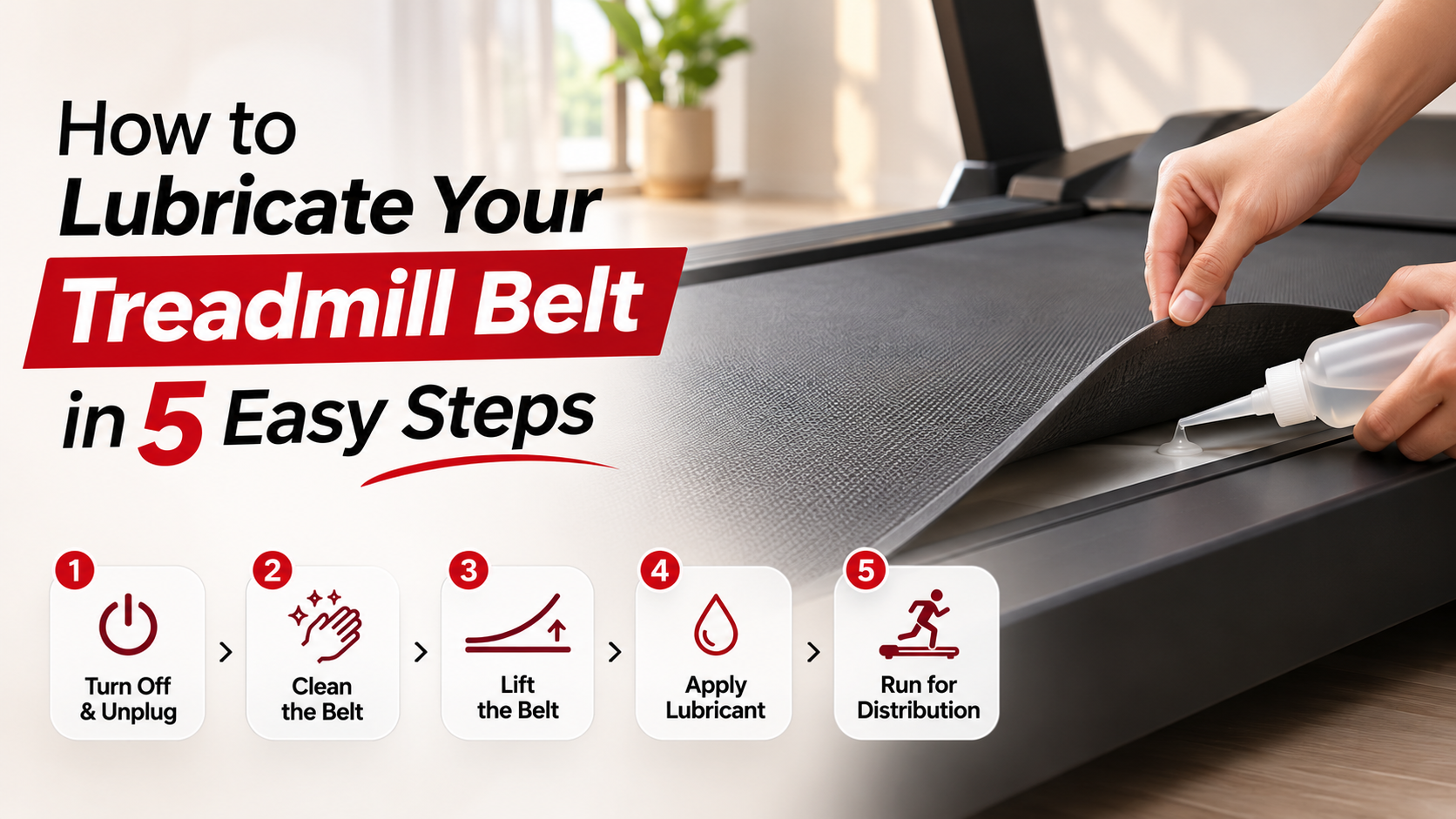
How to Lubricate Your Treadmill Belt in 5 Easy Steps
A treadmill is a great investment for maintaining your fitness at home. However, like any other fitness equipment, it requires regular maintenance to perform efficiently. One of the most important maintenance tasks is lubricating your treadmill belt.
Over time, friction between the running belt and the running deck can increase, affecting your treadmill’s performance. Without proper lubrication, your treadmill may become noisy, experience belt hesitation, or develop unnecessary wear and tear.
The good news is that lubricating a treadmill belt is relatively simple and can be done at home with the right lubricant and a few basic steps.
In this guide, we will explain how to lubricate your treadmill belt in 5 easy steps, when lubrication is needed, and some important maintenance tips to help keep your treadmill running smoothly.
Why Is Treadmill Belt Lubrication Important?
The treadmill belt moves continuously over the running deck during your workout. Lubrication helps reduce friction between these two surfaces, allowing the belt to move smoothly.
Here are some key benefits of regular treadmill belt lubrication:
- Reduces Friction: Helps the running belt move smoothly over the deck.
- Protects the Motor: Reduces unnecessary resistance on the treadmill motor.
- Prevents Excessive Wear: Helps protect the running belt and deck from premature wear.
- Improves Performance: Supports smoother and quieter treadmill operation.
- Extends Equipment Life: Regular maintenance can help keep your treadmill in good working condition.
How to Lubricate Your Treadmill Belt in 5 Easy Steps
Follow these five simple steps to lubricate your treadmill belt properly.
Step 1: Turn Off and Unplug Your Treadmill
Before starting the lubrication process, switch off your treadmill and disconnect the power cord from the electrical outlet.
This is an important safety precaution that prevents accidental belt movement while you are working.
Make sure the treadmill is completely stopped before proceeding.
Step 2: Choose the Right Treadmill Lubricant
Always use a lubricant specifically recommended for your treadmill model.
Many treadmill manufacturers recommend 100% silicone-based treadmill lubricant for compatible running decks.
Avoid using general-purpose oils, cooking oils, or products such as WD-40 unless your treadmill manufacturer specifically recommends them.
Using the wrong lubricant may damage the belt or running deck.
Step 3: Lift the Running Belt and Apply Lubricant
Gently lift one side of the treadmill belt to access the space between the running belt and the running deck.
Apply the recommended amount of lubricant underneath the belt, following your treadmill manufacturer’s instructions.
Repeat the process on the opposite side if required.
Important: Apply lubricant underneath the running belt, not on the top surface where you walk or run.
Step 4: Spread the Lubricant Evenly
After applying the lubricant, lower the running belt carefully.
Reconnect the treadmill only when all tools and hands are clear of moving parts. Run the treadmill at a slow speed without standing on it, following the manufacturer’s recommended procedure.
This helps distribute the lubricant evenly between the belt and the deck.
Step 5: Check the Belt and Test Your Treadmill
Once lubrication is complete, inspect the treadmill belt.
Check that:
- The belt is properly aligned.
- There is no excessive lubricant on the walking surface.
- The belt moves smoothly.
- There are no unusual noises or slipping issues.
If everything is working correctly, your treadmill is ready for your next workout.
If you notice belt slipping, unusual noise, or alignment problems, stop using the treadmill and check the manufacturer’s troubleshooting instructions.
How Often Should You Lubricate Your Treadmill Belt?
The frequency of treadmill belt lubrication depends on your treadmill model, usage, and the type of running deck.
Some manufacturers recommend lubrication every three months or after a specified mileage, while others suggest different maintenance intervals.
Here is a general maintenance reference:
| Treadmill Usage | Suggested Inspection |
|---|---|
| Light usage | Every 6 months |
| Moderate usage | Every 3 months |
| Heavy usage | Every 2 months |
These are general inspection intervals, not universal lubrication instructions. Always follow your treadmill’s user manual. Some models have maintenance-free waxed decks or automatic lubrication systems.
Common Treadmill Lubrication Mistakes to Avoid
Avoid these common mistakes when maintaining your treadmill:
- Using the Wrong Lubricant: Always choose a lubricant approved for your treadmill model.
- Over-Lubricating the Belt: Too much lubricant can cause belt slipping and affect performance.
- Ignoring Regular Maintenance: Check your treadmill periodically for signs of friction or unusual noise.
- Applying Lubricant on the Walking Surface: Lubricant should generally be applied between the belt and deck, not on top.
- Forgetting to Unplug the Treadmill: Always disconnect the power before performing maintenance.
Frequently Asked Questions (FAQs)
1. Can I use any oil to lubricate my treadmill belt?
No. You should use only the lubricant recommended by your treadmill manufacturer. Many models require 100% silicone-based treadmill lubricant.
2. What happens if I don’t lubricate my treadmill belt?
Insufficient lubrication can increase friction between the running belt and deck. This may cause additional stress on the motor and lead to premature wear.
3. Can I lubricate my treadmill belt myself?
Yes. Many treadmills allow users to lubricate the running deck at home. Follow your model’s instructions and always unplug the machine before starting.
4. How do I know if my treadmill needs lubrication?
Increased friction, unusual noise, or a dry running deck may indicate that maintenance is required. However, always check your user manual before applying lubricant.
5. Should I lubricate a brand-new treadmill?
Some treadmills come pre-lubricated, while others require lubrication before their first use. Check the manufacturer’s instructions before applying additional lubricant.
Conclusion
Regular treadmill maintenance is essential for keeping your fitness equipment in good working condition. Proper lubrication helps reduce friction, protect important components, and support smooth treadmill performance.
By following these 5 easy steps to lubricate your treadmill belt, you can take better care of your equipment and enjoy a smoother workout experience.
At Powermax Fitness, we believe that taking care of your fitness equipment is just as important as maintaining your fitness routine. Follow the recommended maintenance schedule and keep your treadmill ready for every workout.