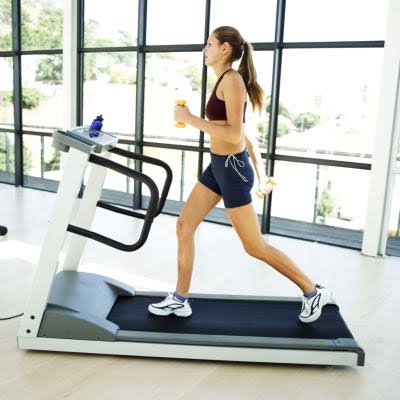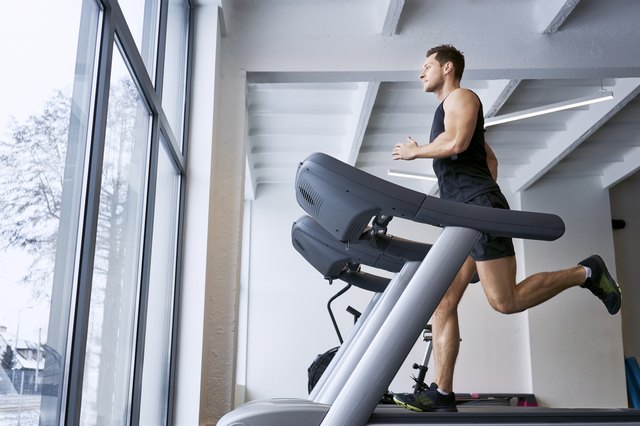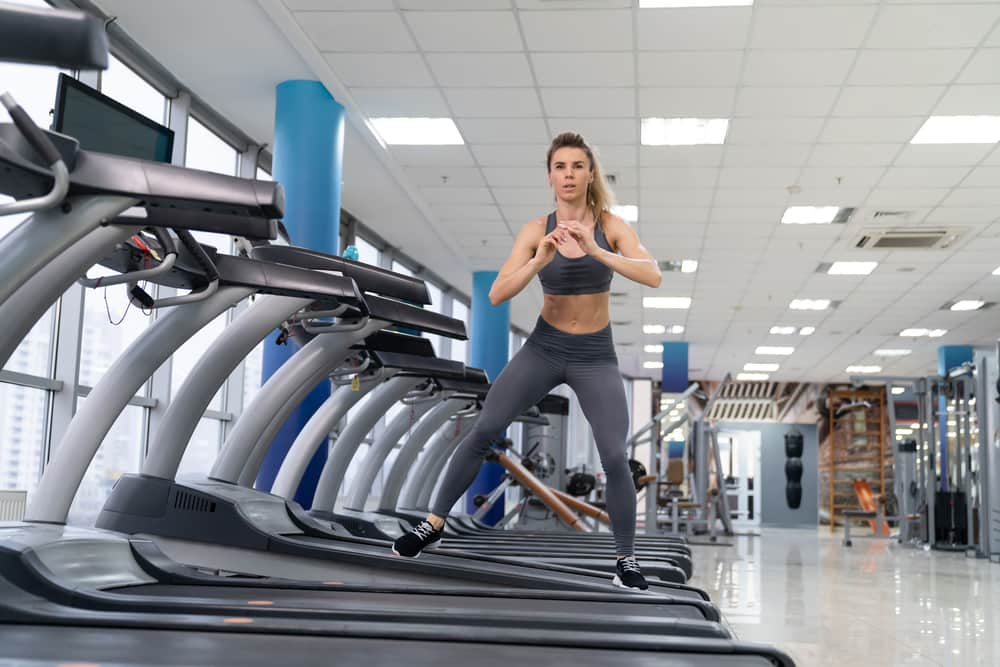
• We’ve all been there. You step onto the belt with the best intentions, but after just ten minutes, you’re staring at the timer like it’s a ticking time bomb. The “dreadmill” effect is real. When the scenery doesn’t change and the only thing moving is the belt beneath your feet, your brain can check out long before your legs do.

     “I want to run, but I just can’t stay motivated.” The truth is, running in a stationary position is a mental game as much as a physical one. If you want to stay consistent, you have to stop treating your run like a chore and start treating it like an experience.

    1. The “Netflix & Run” Strategy

    The easiest way to kill boredom is to save your favorite high-stakes show specifically for your workout. If you only allow yourself to watch that one addictive thriller while you’re moving, you’ll actually start looking forward to your session.

    This is where the equipment makes a massive difference. You want a console that doesn’t shake while you run. In our testing, the PowerMax Treadmill series stands out because the builds are incredibly stable. Many of their models come with tablet holders that are positioned at eye level, so you aren’t straining your neck while catching up on your shows. When your mind is focused on a plot twist, the kilometers fly by.

    2. Switch to “Interval” Mode

    Staring at a steady pace for 30 minutes is a recipe for boredom. Instead, try “pyramid intervals.” Spend one minute at a walking pace, one minute at a jog, and 30 seconds at a sprint, then work your way back down.

    Changing your speed every couple of minutes forces your brain to stay engaged. It breaks the workout into tiny, manageable “chunks” rather than one long, daunting block of time. Plus, interval training is far more effective for heart health and calorie burning than steady-state cardio.

    3. Gamify Your Journey with Apps

    In 2026, you don’t have to look at a blank wall while you run. Apps like Zwift or Kinomap allow you to run through virtual cities or scenic trails with other people from around the world. It turns a solitary workout into a social, competitive game.

    For those who want a heavy-duty machine built for these kinds of interactive virtual runs, the Sparnod Fitness Treadmill range is a popular alternative that offers decent Bluetooth connectivity for app integration. Having a virtual avatar running through the streets of Paris or the Alps makes the four walls of your room feel a lot larger.

    4. Curate a “BPM” Playlist

    Music is a powerful tool, but not just any music. Try searching for “160 BPM” (beats per minute) playlists. These tracks are timed to a professional running cadence. When your feet hit the belt in perfect sync with the beat, you enter a “flow state.”

    In this state, your perceived exertion actually drops. You’re moving faster and harder, but because you’re in rhythm with the music, it feels significantly easier and much less boring.

    5. Focus on the “Feel” (Shock Absorption)

    Sometimes boredom is actually physical discomfort in disguise. If every step feels like a jolt to your knees, you’re going to want to get off the machine pretty quickly. A smoother ride keeps you on the belt longer.

    This is a subtle point, but it’s why we often lean toward PowerMax for long-term use. Their shock absorption technology (like the “Comfort-Spring”) mimics the feel of a professional track. When the impact is dampened, you feel less fatigued, allowing you to focus on your podcast or music rather than your aching joints.

    Final Thought

    Treadmill fatigue happens to the best of us, but it doesn’t have to be the reason you quit. Whether you’re distracting yourself with a great show, competing in a virtual world, or finding a machine that actually feels good to run on, the key is to keep things fresh. A treadmill is a tool for your freedom, not a cage, so start using it like one!


  • Let’s be honest: most of us don’t step onto a treadmill because we’re chasing a marathon finish line. We do it because the day was long, our boss was loud, and our brain feels like it has 47 tabs open at once.

    In 2026, the conversation has shifted. We’ve stopped looking at fitness as a “punishment” for what we ate and started seeing it as a system reset for our frazzled nerves.

    The “Wired but Tired” Trap

    Ever had that heavy, unexplainable “Ghost Fatigue”? You’ve been sitting at a desk all day, yet you feel like you’ve run a mountain. That’s not physical exhaustion; it’s your nervous system getting stuck in “high-alert” mode.

    Think of your Vagus Nerve as a high-speed phone call between your gut and your brain. When we sit still for eight hours, that line gets full of static. You get “brain fog,” you feel irritable, and that third cup of coffee only makes the anxiety worse.

    By hopping on a treadmill for even 15 minutes, you’re essentially “clearing the line.” The rhythmic thump-thump of your stride tells your brain: “Hey, we’re safe. You can stop scanning for threats now.” It’s the fastest way to switch from “fight or flight” back into “rest and digest”.

    Choosing Your Vibe: The Gear That Actually Helps

    Wellness isn’t about suffering; it’s about support. If your treadmill feels like a noisy, clunky machine from a 90s basement, you aren’t going to use it to “de-stress.”

    For the “Zen” Experience: The PowerMax Fitness Treadmill Series is engineered specifically for this kind of mental decompression. By leaning heavily into advanced shock absorption, the deck provides a “forgiving” feel underfoot that mimics a natural stride. This subtle design choice ensures that joints aren’t sending stress signals back to the brain, allowing the user to fully immerse themselves in their movement, music, or a favourite podcast without distraction.

    For the “Quick Win”: If you’re in a tight Mumbai apartment and just need something reliable to get those steps in during a con-call, Sparnod Fitness offers some great, compact models that don’t take over your entire living room.

    The “3-Step Reset” for a Better Mood

    You don’t need to “train.” You just need to move. Here is how I actually use movement to manage my day:

    1. The Morning Fog-Lifter: 10 minutes at a brisk pace. No phone, just breath. It clears out the mental “sludge” before the first email hits your inbox.
    2. The “Meeting Recovery”: Did that last Zoom call spike your cortisol? Don’t grab a snack; grab 5 minutes on the belt. “Walk off” the frustration.
    3. The Sunset Wind-Down: Dim the lights, put on something lo-fi, and just walk. It’s the ultimate signal to your body that the workday is officially over.

    Final Thought

    Movement is a love language you speak to your body. It’s the ultimate form of self-care because it says, “I value how I feel more than how I look.” In 2026, the smartest investment isn’t just a piece of metal and a motor; it’s the peace of mind that comes from knowing you’re just 15 minutes away from a better mood.

  • We’ve all been there. You track every calorie, you eat your proteins, and you hit the treadmill daily, yet the scale refuses to budge. You start questioning your “healthy” chicken salad or that bowl of oats. But what if the problem isn’t what you’re eating, but when you’re eating it?

    Welcome to the world of Chrono-nutrition. Science is now proving that your body handles a 500-calorie meal very differently at 7:00 AM than it does at 10:00 PM.

    The Body’s Internal Kitchen Clock

    Think of your metabolism like a professional kitchen. In the morning, the staff is energized, the ovens are preheated, and everything is processed quickly. By late night, the kitchen is “closing up.” If you send in a big order (a heavy meal) right before closing, the staff gets overwhelmed, and that “order” gets shoved into storage as body fat.

    Your insulin sensitivity, the body’s ability to process sugar is naturally higher in the morning and dips significantly as the sun goes down.

    Why This Matters for Your Treadmill Routine

    If you are a regular runner, timing becomes even more critical. To get the best results, you need a machine that helps you monitor these metabolic windows. For instance, many modern PowerMax Fitness models come with built-in app connectivity that allows you to sync your workout data with your meal timing, helping you see exactly how your morning vs. evening sessions affect your progress.

    Here is how the “Same Food, Different Result” rule works in real life:

    The Morning Burn: Eating your heaviest, carb-rich meals earlier in the day gives your body hours of movement to burn that fuel. Your treadmill miles are more effective because you are burning off active energy rather than just trying to dent stored fat.

    The Midnight Trap: Eating that same “healthy” meal late at night spikes your blood sugar right when your body is trying to lower its temperature for sleep. This keeps you in “storage mode” and ruins your sleep quality, which actually makes you hungrier the next day.

    3 Simple Rules to Master Your Timing

    The 12-Hour Reset: Leave at least 12 hours between your last meal of the night and your first meal of the next day.

    Front-Load Your Calories: Try to consume 70% of your food before 4:00 PM. Let your dinner be the lightest meal of your day.

    Monitor Your Vitals: Whether you are using a high-end Durafit treadmill or a compact walking pad, use the heart rate sensors to ensure you aren’t over-stressing your body during late-evening runs, which can spike cortisol and interfere with your “fasting” window.

    The “Data Advantage” in 2026

    In 2026, fitness is moving away from guesswork and toward precision. It’s no longer just about “burning calories”; it’s about understanding your body’s unique response to timing. Whether you are tracking your heart rate on a professional console or using precision incline settings to stabilize your blood sugar after a meal, the goal is efficiency. 

    By using the tech built into modern treadmills like real-time METs (Metabolic Equivalents) and heart rate recovery scores,you can actually see how a morning session on an empty stomach differs from an evening run. Use your treadmill not just as a tool for sweat, but as a dashboard to find your body’s “golden hour” for fat loss.

    Final Thought 

    Fitness in 2026 is about precision, not just sweat. Modern treadmills are now health dashboards that let you see the “Timing Rule” in action. By tracking your heart rate recovery and METs, you’ll likely notice a morning run on an empty stomach feels and performs differently than a sluggish late-night session. Use your treadmill’s incline and data tracking as a laboratory, find your body’s “golden hour” where the effort you put on the belt yields the maximum result on the scale.

  • We’ve all been there: it’s 2 PM, you’ve been hunched over your laptop for five hours, and your back feels like it’s made of concrete. In 2026, the dream of “moving while you work” is finally a reality for a lot of us. But let’s be honest, trying to type a professional email while your legs are moving can feel a bit like patting your head and rubbing your stomach at the same time.

    If you’ve seen those sleek “walking desk” videos on social media and wondered if you can actually be productive (or if you’ll just fall off), this guide is for you. Here is how to set up your space so you can stay active without losing your mind.

    What Do You Actually Need?

    You don’t need a fancy, all-in-one contraption that looks like a spaceship. Most people find that the best way to start is by pairing a sturdy standing desk with a dedicated walking pad. You want something quiet enough that your coworkers won’t be annoyed by a constant humming sound.

    If you’re looking for a reliable “workhorse” for your home office, the PowerMax WalkPad-2 is a great pick because it’s slim enough to hide under the sofa when you’re done for the day.

    The Budget-Friendly Approach

    Not everyone wants to drop a fortune on a new hobby. If you’re just testing the waters to see if you even like walking while working, there are plenty of entry-level options out there.

    A lot of people start with something like the Lifelong Walking Pad. It’s straightforward, handles a steady walking pace well, and won’t break the bank while you’re figuring out your rhythm.

    Getting the “Vibe” Right: Ergonomics

    The biggest mistake people make is treating their laptop like an “ergonomic wonder device.” If your screen is at the same level as your hands, you’re going to end up hunching over like a gargoyle.

    Try to get your monitor up to eye level. When you’re walking, your body has a natural “bounce,” so having your screen at the right height prevents that weird dizzy feeling. We also recommend a separate keyboard and mouse, trust me, trying to use a laptop trackpad while walking is a recipe for frustration.

    Don’t Be a Hero: Start Slow

    The first time you try this, set the speed to “brisk walk”. Safety isn’t just about the machine; it’s about your pace.

    Start at a crawl, around 0.5 to 1.0 km/h. It feels ridiculously slow, but it allows your brain to get used to the movement. Also, please wear shoes! Walking for two hours in socks or bare feet is a fast track to sore arches and blisters.

    Real Talk: What Can You Actually Do While Walking?

    You probably won’t be able to do intense coding or high-level accounting while walking, at least not at first. Most users find a “sweet spot” for specific tasks:

    The “Walk” List: Answering emails, joining Zoom calls (camera off if you’re huffing and puffing!), and brainstorming sessions.

    The “Sit” List: Anything involving heavy numbers, fine detail work, or when you really need to “deep dive” into a project.

    Maintenance (The Boring but Important Part)

    Under-desk treadmills are smaller and work harder than the big ones at the gym. They need a little love! Make sure to lubricate the belt every few months so the motor doesn’t overheat. And keep those cables tucked away, nobody wants to trip over a laptop charger while they’re in the middle of a meeting.

    Final Thoughts

    Switching to a treadmill desk is one of the best things you can do for your energy levels in 2026. It’s not about training for a marathon at your desk; it’s just about not being stuck in a chair all day. Whether you go with a top-tier PowerMax setup or a simple starter pad, your back (and your step count) will thank you.

  • Let’s be honest: the days of staring at a blank wall while you log miles are officially over. As we move through 2026, the best treadmill in India isn’t just about how fast the belt spins; it’s about how well it plugs into your life. Whether you’re looking to join a virtual marathon from your living room or you just want your heart rate to sync instantly with your favorite app, Bluetooth has become the “must-have” feature for every modern runner.

    The market is currently packed with options, but not every “smart” feature actually makes your life easier. We’ve looked at the top contenders for 2026 and found five standout machines. PowerMax Fitness takes our top spot because they’ve managed to nail that tricky balance between high-tech “smarts” and the kind of rugged durability that actually lasts.

    1. PowerMax Fitness: Where Tech Meets Raw Power

    If you’re looking for the best fitness equipment brand in India, PowerMax is usually the first name that comes up, and for good reason. For anyone who needs a treadmill that is both smart and space-saving, the PowerMax TDM-96B Motorized Treadmill is a fantastic choice.

    The Tech: This machine connects effortlessly via Bluetooth to apps like FitShow, Kinomap, and Zwift. It’s a blast to be able to control your workout from your phone and see where you stand on global leaderboards.

    The Edge: What really stands out here is the build quality. The TDM-96B features a 4HP Peak DC motor and a grippy, 1.4mm grass-textured belt. While some brands focus only on the digital bells and whistles, PowerMax makes sure the motorized treadmill itself is tough enough for a serious professional gym setup at home.

    2. Cultsport: The Social Runner’s Paradise

    Cultsport has really figured out how to make fitness feel less like a chore and more like a game. Their Cultsport TurboRun is a go-to for anyone who thrives on a little friendly competition.

    The Tech: These machines sync directly with the Cultsport Play App. You can run through gorgeous virtual worlds and race against other people in real-time.

    The Comparison: The app experience here is top-tier. However, the hardware can sometimes feel a bit lighter than the heavy-duty frames you get with PowerMax. It’s perfect if you love the “gamified” side of fitness, but dedicated marathoners might miss that “industrial” sturdiness.

    3. Durafit: The Reliable Workhorse

    Durafit is a name many Indian families trust because they build machines that just work. The Durafit Ace Pro is their smart answer for the modern runner.

    The Tech: It focuses on the essentials, solid Bluetooth for your music and reliable app connectivity to track your speed and distance.

    The Comparison: Durafit is great if you want a high user weight capacity (up to 120kg) and a stable running surface. The console feels a bit more “old school” than the sleek touchscreens on premium PowerMax models, but it’s a solid, dependable choice.

    4. Sparnod Fitness: Smart Features on a Budget

    If you’re building a home gym set and want to keep things affordable, Sparnod Fitness is a very popular entry-level option. The Sparnod STH-1200 offers a surprising amount of tech for the price.

    The Tech: You get standard Bluetooth speakers and FitShow app support, giving you a connected experience without the premium price tag.

    The Comparison: It’s a great affordable fitness equipment choice, though keep in mind that the motor and belt are generally narrower. It’s perfect for power walking or light jogging, but maybe not for a household of heavy sprinters.

    5. Lifelong: The Smart Choice for Small Spaces

    Lifelong has become a favorite for apartment dwellers. Their Lifelong FitPro series is designed to fit into those tight corners without sacrificing modern perks.

    The Tech: Like the others, it includes Bluetooth speakers and tracks your progress through the FitShow app.

    The Comparison: If your priority is a foldable, space-saving home workout equipment solution, Lifelong delivers. Just remember that because it’s built to be compact, the running deck is a bit smaller than the professional gym grade setups offered by brands like PowerMax.

    Final Thoughts

    At the end of the day, a treadmill is a long-term investment in your health. While Cultsport wins on the app experience and Sparnod wins on price, PowerMax Fitness offers the best “all-in-one” package. By pairing commercial-grade motors with a massive service network and seamless Bluetooth, PowerMax ensures your machine stays smart and actually running for years.

  • When building a home gym in 2025, the debate has shifted from “which brand” to a much more fundamental question: Manual or Motorized? Most fitness enthusiasts assume a treadmill is just a moving belt, but the mechanics behind how that belt moves can either accelerate your progress or completely sabotage your specific fitness goals. At TreadmillReviews.in, we’ve analyzed the top fitness equipment in India to help you decide which engine should power your journey.

    The Power Source: You vs. The Motor

    Manual Treadmills: These are non-electric and powered entirely by your movement. If you want a rugged, multi-purpose tool, the PowerMax MFT-410 is a 4-in-1 powerhouse that includes a jogger, stepper, twister, and push-up bar, making it a favorite for those seeking high-intensity functional training.

    Motorized Treadmills: These use an electric motor to set a consistent pace. For a reliable and sturdy motorized experience, the Sparnod Fitness STH-1200 is a top-rated choice in India, known for its sleek design and user-friendly features that make it ideal for daily home cardio.

    Maximum Calorie Burn

    If your primary focus is weight loss, the manual treadmill, specifically the curved or multi-function manual treadmill is the undisputed king. Because you act as the motor, your body works significantly harder to friction-start the belt and maintain its momentum. Research suggests manual training can burn up to 30% more calories per session compared to standard motorized walking.

    Endurance & Marathon Training

    For those building long-distance stamina, a motorized treadmill is your best partner. Maintaining a rhythmic, consistent pace for 60+ minutes on a manual belt is exhausting and often leads to premature muscle fatigue. A motorized machine allows you to set a “target pace” and utilize auto-incline features to simulate outdoor terrain, ensuring your cardiovascular system is pushed to its limits without tripping over a manual belt’s resistance.

    Quick Comparison: Choosing Your 2025 Setup

    FeatureManual TreadmillMotorized Treadmill
    Best ForHIIT & Rapid Weight LossLong Distance & Stamina
    PowerUser-Powered (Eco-Friendly)AC/DC Motor (Steady Speed)
    SafetyStops when you stopEmergency stop key required
    PriceAffordable Fitness EquipmentPremium Investment

    Final Thoughts: Which One Wins?

    Your choice shouldn’t be based on the treadmill price alone; it must align with your body’s needs:

    Go Manual if you have a “no-excuses” mindset and want a high-intensity, total-body workout in a compact, non-electric format.

    Go Motorized if you prefer data-driven workouts, require joint-protecting shock absorption, or are training for specific distance milestones.

    Stop sabotaging your results by using the wrong tool. Picking a treadmill isn’t just about finding a place to run; it’s about matching the machine’s mechanics to your body’s unique fitness goals. Whether you are chasing the high-intensity burn of a manual belt or the steady, joint-safe rhythm of a motorized motor, the right choice ensures that every drop of sweat translates into progress.

  • Investing in the best gym equipment for your long-term wellness goals is one of the most substantial investments you can make in 2025. Finding the best brand with many options flooding the Indian market takes a careful look at durability, technology, and after-sales support. Whether you are looking for a high-performance treadmill machine or a versatile home gym set, the brand chosen by you would last in order to keep the consistency of your workouts. Since there are several brands in the current industry, below are the top five leading brands that do quality fitness equipment for every type of athlete.

    PowerMax Fitness: The Industry Leader

    PowerMax Fitness was regarded as the best fitness equipment brand in India due to the availability of a complete range of cardio fitness equipment, along with strength fitness equipment. They are quite famous and known for producing the best treadmill in India, having advanced AC motor technology in treadmills for commercial and home users. These products are designed in such a way that they can easily bear the burden of extended utilization, thus making them the first choice for those planning to purchase a motorized treadmill unit that will last long. In addition to cardio, they also manufacture strong multi-gym machine units and smith machines that provide one with the opportunity to create a professional level environment within the comfort of home. Their commitment to excellence ensures they remain the high-grade provider of exercise equipment for those who refuse to compromise on performance.

    Sparnod Fitness: Innovation at Affordable Costs

    For those looking for affordable fitness equipment, without compromising on modern features, Sparnod Fitness stands out from the crowd. Specializing in stylish and functionally competent home workout equipment, they have earned a reputation among city people who have little space within their apartments for massive equipment. Its treadmill for home range often features foldable designs and intuitive consoles that show your progress in real time. Their running machine price is relatively more affordable without compromising on quality, offering a wide array of exercise bikes and ellipticals that can deliver a smooth, low-impact workout. Sparnod is an excellent entry point for beginners who want to set up a home exercise equipment station without making a huge initial investment.

    Durafit: Built for Endurance

    Durafit has established its name in the top brands for treadmills in India due to its heavy orientation to structural integrity and motor power. Their machines are specifically made for serious runners who require a running machine that gives them high speed and longitude. Most of their high-end models boast of a heavy-duty treadmill DC motor or AC motor that makes sure the motorized treadmill price corresponds with a product fit for longevity. For those fitness enthusiasts who place a steady and reliable electric treadmill experience as their priority, the Durafit model promises top-rated fitness equipment with the feel of a professional gym. They are the necessary partner on whom one can rely when the prime priority is cardiovascular health and marathon preparation. 

    Cockatoo: The Expert in Home Use Equipment 

    Cockatoo has been in the development and production of top-notch and best treadmill for home uses, focusing on user experience and compact design. They are highly reputed for their elliptical cross trainer for home use and special variants of rowing machines that aim at full-body conditioning. Cockatoo keeps a competitive fitness equipment price, hence making health easy to be integrated into any family’s lives. Their line of home fitness equipment is designed to be very quiet and efficient for residential settings. Be it your manual treadmill or high-tech treadmill machine; Cockatoo seems to offer you versatile solutions, ranking high in exercise equipment for sale in the virtual marketplace.

    Welcare: Professional Standards at Home 

    Welcare seems to fill the void between purely commercial fitness equipment and the needs of a residence. An impressive array of strength equipment, including the weight bench to several benches and racks for use within the home setting, is available. Many of their machines can be found in professional gym settings-a testament to their durability and biomechanical precision. For those who desire to have a complete set of home gym equipment, Welcare provides every bit of equipment needed, from a recumbent exercise bike to the high-capacity cardio fitness equipment. Recovery is also important for well-being; hence, Welcare often integrates advanced features into their fitness equipment to make sure that the approach to health is holistic.

    Final Thoughts on Your Investment in Fitness 

    The best brand for gym equipment in India balances your goals with space and budget. Each one of these five brands is a different path to health and fitness-whether you’re looking to replicate a PowerMax Fitness layout at a commercial facility or squeeze in a compact exercise bike in a small home for those quick morning sessions. As you search for treadmills on sale and compare running machine prices from one platform to another, remember that the top treadmill brands are ones that will consistently support you and provide high-quality parts for you. Investing in good-quality gym equipment from a well-known fitness equipment company in India sets you up for success, including being injury-free this 2025.

  • Recovering from a cardiac event is a journey of “one step at a time”, literally. When your cardiologist gives you the green light to start home exercise, the most common question we hear is: “Should I get a treadmill or an elliptical?”

    Both are powerhouses for cardiovascular health, but when it’s your heart on the line, the nuances of equipment engineering matter. Today, we’re breaking down the science and why PowerMax Fitness stands out as the gold standard for Indian homes in recovery.

    The Cardiac Rehab Check list

    In cardiac rehabilitation, the goal isn’t just “burning calories.” It’s about:

    Controlled Intensity: Keeping your heart rate within a specific, safe zone.

    Low Impact: Avoiding unnecessary stress on the body while the heart works.

    Real-time Monitoring: Having professional-grade sensors at your fingertips.

    The Case for the Treadmill 

    Treadmills are the primary choice in clinical rehab centres because walking is the most functional, natural movement for the human body.

    Precise Control: You need to start slow. PowerMax machines allow for speeds as low as 0.5 km/h with tiny increments.

    Superior Shock Absorption: Unlike walking on the road, the PowerMax Fitness TDM-97 Motorized Treadmill features a multi-layer running belt that mimics the softness of grass, protecting your joints while your heart gets the workout it needs.

    The Case for the Elliptical (The Zero-Impact Option)

    Ellipticals are excellent for those with severe joint pain, as your feet never leave the pedals.

    Full Body Engagement: They use both arms and legs, which can help distribute exertion.

    The Caveat: Because you use more muscle groups, your heart rate can spike faster. This is why having a reliable machine like the PowerMax EH-350S Elliptical Cross Trainer is crucial. It offers 8 levels of magnetic resistance to ensure you don’t overexert yourself.

    Alternative Option

    Sparnod Fitness: They offer popular models like the Sparnod STH-1200 Treadmill or theSparnod SET-43 Elliptical. While these are solid entry-level machines, they are often designed for general weight loss and younger users.

    The PowerMax Edge: PowerMax focuses on semi-commercial grade durability for home use. Their motors are quieter, their frames are sturdier, and their pulse sensors are calibrated for higher accuracy factors that are non-negotiable when you are monitoring heart health.

    Comparison Table: At a Glance

    FeaturePowerMax Sparnod 
    Primary FocusSafety & Rehab EngineeringGeneral Home Fitness
    Shock AbsorptionMulti-layer Grass Texture (High)Standard Cushioning (Medium)
    Motor Reliability4.0 HP – 6.0 HP Peak (Smooth)Typically 3.0 HP – 4.0 HP Peak
    Best ForCardiac Recovery & SeniorsBeginners & Weight Loss

    Key Safety Tips for Home Cardiac Rehab

    Warm Up & Cool Down: Never skip these. They allow your heart rate to rise and fall gradually.

    The “Talk Test”: You should be able to carry on a conversation while exercising. If you’re gasping for air, slow down immediately.

    Consult Your Doctor: Always follow the specific heart rate zones prescribed by your medical team.

    Final Thoughts

    When it comes to cardiac rehabilitation, your choice of equipment is an investment in your long-term recovery and safety. While both machines have their merits, a high-quality treadmill from PowerMax Fitness offers the most natural and controlled path toward a stronger heart. Unlike budget-friendly alternatives like Sparnod, PowerMax provides the structural integrity and precision monitoring that a sensitive heart requires. Choosing PowerMax means you aren’t just buying a piece of gym gear; you are bringing home a reliable partner that grows with your fitness levels, offering peace of mind through its superior shock absorption and consistent motor performance. Ultimately, the ability to mimic natural walking in a safe, cushioned environment makes the PowerMax treadmill the gold standard for anyone looking to reclaim their health after a cardiac event.

  • All these years, home fitness has grown silently. Not everyone wants heavy treadmills, loud motors, or bulky gym equipment to dominate the living space. Simple, quiet, and space-saving ways to keep active have slowly started to appeal to more people. And that is the exact reason why this walking pad trend is growing so fast in Indian homes. A walking pad fits into day-to-day life seamlessly and makes daily cardio comfortable, easy, and sustainable.

    Unlike a conventional treadmill, which demands intensive running, a walking pad is intended for smooth walking. It lets you move around while you work, watch TV, or even take conference calls. That changes fitness from being a scheduled activity to a natural part of your day.

    Why Walking Pads Are Becoming So Popular

    Walking pads encourage mobility without pressure. You will not be changing clothes, driving over anywhere, or committing to some extensive workouts. You simply step on and start walking. Such light activity serves to improve your circulation, accelerate fat loss, energize, and reduce stiffness associated with long hours of sitting. Among people who work from home, the walking pad becomes one of the easiest ways to fit in exercise without changing your routine.

    Another major advantage is joint comfort. Because walking pads work at controlled speeds, they reduce impact on knees and ankles. This makes them ideal for beginners, seniors, and anyone recovering from injury. You also avoid the problems of bad weather, traffic, and uneven surfaces compared to outdoor walking.

    How Walking Pads Fit into a Well-Rounded Home Gym Setup

    Most people already use treadmills, cross trainers, dumbbells, and strength equipment for structured workouts. A walking pad does not replace those tools; instead, it complements them. You may do an active jogging session on the treadmill but would rely on a walking pad for light daily movement. That would keep your body active without burnout.

    Walking pads are especially useful on rest days. Instead of complete inactivity, you stay mobile with low-intensity walking that helps in recovery, posture, and circulation. And over time, it leads to improved endurance, smoother joints, and overall improved fitness.

    PowerMax Walking Pad for Home Use

    The PowerMax WalkPad 2 for Home Use is a great example of compact, modern walking solutions. It is designed for those people who want easy, daily movement without installing a full-sized treadmill. Sleek in design, it can slide neatly under furniture, while its quiet motor provides smooth indoor walking. For users already familiar with PowerMax workout routines or strength equipment setups, this particular walking pad blends effortlessly within the same home fitness environment.

    A Strong Alternative in the Walking Pad Category

    Other trusted options in the category include Sparnod STH-3002 for home use, walking pad fabricated for daily walking with a light-weight, affordable solution. It allows basic movement needs without demanding extra space or complicated setup. It works well for apartments, work-from-home users, and generally for those who start their journey of keeping fit through simple everyday steps.

    Why Cozy Cardio Actually Works

    The main reason walking pads work is that they eliminate friction. When fitness feels easy to start, people stay consistent. Walking while watching a show or answering emails does not feel like forced exercise, yet it steadily adds to daily calorie burn and improves heart health. Over the course of weeks and months, these small sessions create visible improvements in stamina, posture, and body composition.

    Walking pads reduce the mental pressure many people feel in association with traditional workouts. Instead of thinking in terms of high-intensity sessions, it becomes more about simply walking in a preferred manner. An approach that is sure to produce long-term success over short-term motivation.

    Final Thoughts

    This walking pad trend is all about making every moment of daily movement easy, comfortable, and realistic in modern lifestyles. Whether it be a compact one, such as the PowerMax WalkPad 2, or a more beginning-oriented model, such as the Sparnod STH-3002, a walking pad seamlessly changes passive hours into active ones. For anyone aiming at creating an intimate and, at the same time, practical home fitness routine, walking pads are definitely one of the smartest upgrades today. They support consistency without pressure, recovery without strain, and cardio without clutter. This is why cozy cardio is no longer a trend but a lifestyle shift.

  • Building a home gym has become a number one priority for many Indian households. The choice of brand becomes just as important as the kind of machine chosen. There are at least a dozen brands in the market, and it gets really overwhelming to understand which brands provide durable, high-value, and beginner-friendly equipment for home use. The following expert guide ranks the top-rated gym equipment brands in India, based on product quality, consumer trust, after-sales support, and overall value. Starting from treadmills and cross-trainers to exercise bikes and strength machines, this breakdown shall help you choose with confidence.

    1. PowerMax Fitness – Best Overall for Home Fitness Brand

    Why it leads: PowerMax Fitness leads the Indian home gym market because, over time, the brand has continued to offer dependably good treadmills, cross trainers, and multi gyms at strong value. In particular, the brand is known for durability, modern features, and industry-leading after-sales service.

    Ideal For: For beginners, families, apartment set-ups, and anyone looking for high-quality yet affordable fitness equipment.

    Recommended Product: PowerMax TDA-230 Motorized Treadmill.

    Powerful motor; auto incline; great for both regular home walking and jogging.

    2. Durafit – Best for Walking & Family Use

    Durafit is one of the most preferred brands amongst walking-focused users. The brands offer super stable, silent, and multi-user household-friendly treadmills.

    Strengths: Strong motors, long frames, high user-weight capacity; great for families with 2-4 users.

    Recommended Product: Ace Single Function Treadmill. Among the best options for daily walking and light jogging over a period.

    3. Cockatoo – Most Economical Brand

    Cockatoo remains the favourite among first-timers who set up a small budget home gym. Their machines are lightweight, take little space, and are easy to operate, particularly for beginners.

    Best For: Students, compact homes, first-time buyers.

    Recommended Product: Cockatoo CTM-05 3HP Peak DC Motorized Treadmill. Great entry-level treadmill with very great incline and safety options.

    4. Fitkit – Best for App-Integrated Smart Workouts

    Fitkit has collaborated with CultSport when it comes to offering smart and app-connected treadmills and bikes. This is very helpful for such users who love guided workouts and online coaching.

    Why It Stands Out: Free at-home workout programs, app tracking, and fresh designs.

    Product Suggestion:FITKIT10K2.5HP Treadmill 4HP Powerful Brushless Motor. Very good cushioning, very good application interface.

    5. LifeLong: Best Entry-Level Fitness Brand

    Lifelong products are positioned for entry-level home-gym users who would like a good but affordable product to cover basic cardio exercises.

    Strengths: Very inexpensive, easy to assemble. Good for light exercising.

    Recommended Product: Lifelong FitPro 4HP Motorized Treadmill. A good, solid starting-point treadmill for the beginner.

    6. RPM Fitness – Best for Compact Motorized Treadmills

    RPM Fitness supplies fully modern, folding treadmills that fit today’s apartment lifestyles. Their machines are highly recognized for ease of movement and very low storage requirements.

    Product Recommended: RPM Active1100DC 6 HP Peak Treadmill. Good for walking and light jogging in small houses.

    How to Choose the Best Gym Equipment Brand for Home Use Keep these factors in mind before opting for any brand.

    Your Training Goals Walking → Durafit, Cockatoo

    Exercising-Jogging → PowerMax, Fitkit 

    Strength training → Power Max multi gyms 

    App-guided workouts → Fitkit 

    Space Available Small apartments → RPM Fitness, Cockatoo 

    Large home gym room: PowerMax, Durafit 

    Budget Entry-level → Lifelong Cockatoo 

    Mid-range → Durafit, Fitkit 

    Premium → PowerMax 

    After-sales support→ PowerMax, Durafit have the highest ranking in service quality. 

    Final Thoughts

    India has no shortage of gym equipment brands, but only a few consistently deliver quality, durability, and great after-sales service. For most households, PowerMax Fitness remains the strongest overall choice, backed by a wide range of treadmills, cross trainers, bikes, and multi gyms. Durafit, Cockatoo, Fitkit, also make excellent category-specific machines depending on your budget and goals. Choose based on your home space, workout habits, and long-term fitness goals and your home gym will feel complete, efficient, and built to last.

  • Most people think of a treadmill as a simple cardio machine for burning calories. But with consistency and proper usage, a treadmill does so much more: it shapes your body, tones your muscles, and improves your overall physique in ways most aren’t expecting. Whether walking, jogging, or adding incline, your treadmill routine can become one of the most effective full-body sculpting tools in your home.

    Why Treadmill Training Shapes Your Body

    A treadmill works many major muscle groups simultaneously. You will find that during walking or running using proper posture, your legs, glutes, core, and even the upper body will work. Over time, this balanced activation leads to fat loss, better definition, improved posture, and increased strength endurance.

    Unlike running outdoors, a treadmill provides better cushioning, consistent rhythm, and adjustable incline to fine-tune your sculpting workouts without joint stress or uneven terrain.

    How different treadmill styles sculpt various parts of your body

    1. Walking for Everyday Fat Loss and Tone

    A brisk walk at 5-6 km/h is enough to activate your: calves, hamstrings, and core stabilizers. This steady-state cardio burns fat while muscles are kept active and slowly improves definition without exhaustion.

    2. Jogging for Lean Muscle & Better Shape

    Jogging strengthens: quads, glutes, hip flexors. In time, your legs take on a more toned look, your waist firms up, and your stamina increases. You want that foundation to have a sculpted lower body.

    3. Incline Training for Maximum Muscle Sculpting

    Incline treadmill training is where the real body shaping happens. Even a 5-10% incline drastically increases engagement of the glutes and hamstrings. You will burn more calories at less speed while sculpting: glutes lift & roundness, hamstrings – back-leg shape, calves (stronger lower legs), core: tightened waist from stabilization. This makes incline the treadmill’s “secret weapon” for a sculpted physique.

    4. HIIT for Fat Loss and Visible Muscle

    Short bursts of speed followed by recovery intervals create an afterburn effect that helps your body burn fat for hours post-workout. This will be ideal if you want: a slimmer midsection, defined legs, improved metabolism

    Regular sessions of HIIT accelerate visible changes drastically.

    Picking the Correct Treadmill for Body Sculpting

    To avoid repetitive product recommendations, here are two fresh, reliable treadmill options from trusted brands, each supporting different fitness goals:

    PowerMax Fitness TDA-230 Motorized Treadmill. A great choice for workouts on an incline and sculpting routines, this machine includes superior shock absorption, strong build quality, and multiple preset programs. Perfect for daily body shaping at home.

    Cockatoo CTM-201 Motorized Treadmill. A lightweight, space-friendly option for beginners wanting to sculpt their body with consistent walking or jogging sessions. It supports incline training, helping activate glutes and hamstrings without needing a large space.

    How Often Should You Use the Treadmill for Visible Results?

    A realistic schedule for body sculpting is as follows:

    3-4 days/week of steady walking or jogging

    2 days/week of incline workouts

    1-2 days/week of short HIIT sessions

    You don’t have to go long; 20-30 minutes is fine, provided you do it consistently.

    Final Thoughts 

    Regular treadmill workouts do more than burn calories-they shape your legs, lift your glutes, tighten your core, and help reveal lean muscle. Whether you’re just starting or upgrading a home workout routine, consistent use of the treadmill will steadily and safely transform your body. Match a reliable treadmill supporting your goals with your training, and improvement becomes easier, quicker, and more sustainable. It is all about building the habit, keeping up the pace; then, your body follows suit automatically.

  • The treadmill is one of the easiest and most effective ways to get started with one’s routine relating to physical fitness. Be it getting back into exercise, initiating a fitness program, or even putting together a home workout setup, treadmill training provides a safe, controlled, and beginner-friendly method of building stamina, burning calories, and enhancing regularity. If done correctly, even 15-20 minutes daily will make a difference in your energy, mood, and general health.

    Why Beginners Should Begin with Treadmill Workouts

    Advantages of treadmills for a beginner include the fact that speed, incline, and intensity are completely up to you. Using the treadmill machine also provides a predictable environment that is cushioned, whereas outdoors, the weather, terrain, and varying paces can easily fluctuate. This goes easy on your joints. This is easily followed through for a long-term routine, especially using a home-use treadmill, whereby the simplicity of it all involves nothing more than stepping onto the deck.

    Choose the right treadmill to start your journey with.

    Although a beginner has no need for advanced features, the right model can make training safer and fun. Some reliable options for new users include:

    If you want a beginner-friendly treadmill that feels smooth, safe, and easy to use daily, the PowerMax TDM-96 Motorised Treadmill is one of the strongest options to start with. It offers a comfortable running deck, good cushioning, and simple controls that help new users feel confident from day one. You can check it out here:

    Durafit Panther 3 HP Peak Treadmill. It’s a good, entry-level electric treadmill that supports good cushioning, reasonably pre-set programming, and a compact, foldable design. Ideal for users looking for a simple and stable machine meant for daily walks and light jogging.

    Both of these models are very good for new users who have just started their fitness routine, having the perfect balance of performance, comfort, and safety.

    A Simple, Beginner Treadmill Routine: Safe and Effective

    The key to starting strong isn’t intensity; it’s consistency. Here’s a beginner-friendly treadmill workout you can follow.

    Warm-Up (3 minutes)

    Begin with an easy walk at a comfortable pace. This prepares your joints and muscles for motion.

    Steady Walk (5 minutes)

    Move a little faster to a brisk walk. You should be able to talk comfortably.

    Walk-Jog Intervals (6 minutes)

    Alternate:

    • 1-minute light jog

    • In 1-minute walk

    This helps build stamina without overstraining your body. Cool Down 3-4 minutes Walk slowly, slowing down to gradually bring the heart rate down. Do this routine 4-5 days a week. As you get stronger, increase the time that you jog or add a gentle incline to ramp up your calorie burn. 

    Tips to Stay Consistent as a Beginner

    Keep your workouts short to start with, such as 10-20 minutes 

    Put your treadmill somewhere you see every day

    Time yourself once a week, and track your speed, time, or distance. 

    Wear comfortable shoes that can reduce impact 

    Don’t compare yourself to others; progress is personal

    Final Thoughts 

    Starting your journey of fitness needn’t be complex. A treadmill gives you the perfect platform to build healthy habits sans pressure or confusion. Starting with user-friendly machines like the PowerMax TDA-100 and variants like the Durafit Panther helps in starting strong, staying consistent, and turning daily movement into a lifestyle.

  • If you’ve ever felt “stuck” on a flat treadmill, adding incline is the simplest way to get more calorie burn, stronger legs and glutes, and better stamina without needing to run faster. A gentle hill turns easy walking into serious work, raises your heart rate sooner, and is generally kinder to joints than cranking up speed. The result: more training effect in less time, and a routine that’s easier to stick with.

    Why incline works

    Walking or jogging uphill recruits more posterior-chain muscle (glutes, hamstrings, calves), increases oxygen demand, and elevates energy expenditure versus flat terrain at the same speed. For most home users that means you can keep pace comfortably yet still push fitness, which is ideal for beginners, return-to-fitness folks, and anyone with touchy knees.

    Simple incline workouts you’ll actually use

    Start with these no-drama sessions and repeat 3-4x/week. Keep your posture tall, eyes ahead, and hands off the rails unless you need a quick balance check.

    10×1 Hill Pops (20 min): 1 min at 4-6% incline + 1 min flat recovery.

    Steady Hike (15-25 min): Set 5-8% and walk steady at a conversational pace.

    Pyramid (24 min): 2 min each at 2% → 4% → 6% → 8% → 6% → 4% → 2%, with easy pace throughout.

    If you’re already a runner, keep speed modest and use incline to add stimulus without pounding; if you’re new, stick to brisk walking and let the grade do the work.

    What to look for in an incline-friendly treadmill

    Prioritize a deck that feels stable and cushioned, quick one-touch incline controls, and clear readouts for speed/grade. Auto-incline is more convenient than manual pins (especially for intervals), and a wider belt helps you stay relaxed when the grade rises.

    Two solid examples to compare

    PowerMax TDA-100  a compact, home-friendly treadmill with auto-incline and semi-auto lubrication, ideal for regular hill workouts without heavy maintenance. The cushioned deck keeps incline walking and jogs joint-friendly, and one-touch controls make intervals easy.

    Sparnod STH-4200  a popular automatic-incline option frequently recommended for home users who want app connectivity and varied programs; good value pick for everyday hill sessions.

    Product page: sparnodfitness.com/sparnod-treadmill-sth-4200

    Both support programmed hills; choose by space, budget, deck feel, and how many people will use it.

    Flat vs incline: when to use each

    Flat sessions are perfect for form drills, recovery days, and speed development. Incline days raise training load without chasing top speed, build climbing strength, and elevate calorie burn at a joint-friendlier cadence. Rotate them across your week so your legs get stronger and your motivation stays high.

    Safety and form tips

    Warm up 5 minutes flat before raising the deck. Keep your ribs stacked over your hips, avoid leaning on the console, shorten your stride slightly as grade rises, and cap max incline to what keeps your gait smooth. If you feel your heels slapping or you start hanging on, lower grade a notch and rebuild.

    Final Thought 

    Incline is the quiet cheat code for better treadmill sessions. It makes walking meaningful, makes running stronger, and helps you get more from the same minutes. Pick a machine with dependable motorized incline and a comfortable deck, start with simple hill blocks, and let the grade carry your fitness forward.

  • Buying a treadmill for home is an investment, and like any good running machine, it takes a little care so that it keeps performing smoothly over the years. The difference between a treadmill that feels solid even after five years and one that starts squeaking, slipping, or dying early usually comes down to basic maintenance. The good news is that you do not need to be a technician. A simple monthly routine will help protect the motor, belt, and electronics of your treadmill and save you lots of repair costs in the future.

    1. Keep it clean: dust is your silent enemy.

    Most homes have more dust than we imagine, and the treadmill pulls that dust right into the area of the motor. Gradually, it builds up heat and wears the parts faster. After every few workouts, the console, handrails, and siderails should be wiped down with a soft, dry cloth. Once a week, vacuum around and under the treadmill, paying special attention to the motor cover and sides of the running belt. Never spray cleaner directly onto the treadmill machine; spray onto the cloth if you’re using a mild surface cleaner on plastic parts.

    2. Regular centering and tensioning of the belt

    If the belt has shifted to one side or feels as if it’s slipping under your feet, don’t ignore it. That misaligned or loose belt increases friction, stressing both the belt and the motor. Most home treadmills have adjustment screws on the back of the deck. Small quarter turns, as the manual will usually instruct, normally bring the belt back to the center, restoring proper tension. Check alignment every few weeks if multiple family members use the treadmill for their home workouts.

    3. Lubricate the belt according to the manual.

    The biggest factors in lifespan are related to lubrication. Without lubrication, friction between the belt and deck rises, overheating the motor and controller. Most modern models come with silicone oil and a recommended schedule, such as every 2-3 months depending on usage. Always apply treadmill-approved silicone lubricant, never using any random household oils. Apply only the amount recommended by the manufacturer. Over-lubrication can also cause problems, such as belt slippage.

    4. Give the motor and electronics breathing room

    Treadmills need ventilation. If you push the treadmill tight against a wall or box it in with furniture, heat builds up around the motor and control board, shortening lifespan. Leave some space in front, at the sides, and at the back of this machine for air to flow through. If you happen to see that the motor cover area gets very hot or a burning smell after longer runs, stop and unplug; let it cool down. You may call the service. That is an indication that your running machine is working harder than it should.

    5. Use a stabilizer or proper power protection

    Voltage fluctuations can be brutal to electronics. A good surge protector or voltage stabilizer could protect the motor and control board, especially on budget treadmills meant for light home use. This is even more important in the case of many appliances on the same line: AC, fridge, etc. Check your treadmill manual; many brands recommend a stabilizer to keep the warranty valid.

    6. Respect the weight and usage limits

    Every treadmill has a maximum user weight rating, and a duty-cycle expectation. Consistently running above the weight limit, or using a light home model as a commercial treadmill in a professional gym or office, is a quick way to kill the motor and void warranty. If one’s household consists of heavy users or multiple runners, it’s wiser to choose the more robust model right from the beginning instead of pushing the entry-level unit beyond what it was designed for.

    7. Example models, and why maintenance still matters

    For instance, take a mid-range home model like the PowerMax Fitness TDM-100M Semi-Auto Lubrication Multifunction Treadmill. It has a foldable frame, a cushioned running deck, and a DC motor designed for regular home use. If you clean the belt area weekly, wipe sweat and dust off the console and railings, and lubricate the running belt as recommended in the manual, you reduce friction on the motor and deck and help the treadmill run smoothly for years.

    On the other hand, a compact starter option like the Durafit Compact 2.5 HP Treadmill still benefits hugely from basic care. Keeping it on a stable surface, avoiding overloading the max user weight, vacuuming around the base, and checking for loose screws or unusual noises once a month will delay wear and tear on the belt and rollers. Simple habits like these can make even an entry-level folding treadmill feel reliable well beyond its basic warranty period.

    8. Plan simple monthly assessments

    Once a month, conduct a quick “health check” that takes 10-15 minutes:

    Wipe and vacuum around the treadmill

    Check belt centering and tension

    Listen for new noises at low and high speeds

    Make sure all bolts and screws feel snug (no wobble)

    Confirm safety key and emergency stop functioning

    Final Thought 

    It’s much cheaper to catch small issues, such as a slight scraping sound or minor slipping, early rather than waiting until the belt frays or the controller blows. Final Remarks A treadmill is one of the most useful pieces of home fitness equipment you can own, but it’s still a machine with moving parts. A little regular attention beats expensive repairs later. Keep it clean, keep it cool, keep it lubricated, and respect its limits. That way, your running machine will have no problem giving you years of safe and smooth cardio, even in the smallest Indian homes.

  • Whether you’re a skillful athlete or a recreational runner, there’s no denying the fact that you require an ample supply of stamina for running long distances effectively without falling behind. 

    Stamina is essential for running because it allows you to sustain your physical effort over extended distances and durations. It reduces fatigue and enables you to perform at your best.It minimizes the risk of exhaustion and injury. Stamina is a crucial aspect of running that impacts your ability to go the distance and enjoy your runs to the fullest.

    We will explore various strategies, techniques, and tips to help you boost your running stamina and become a better runner.

    Enhancing stamina for running

    1. Setting Clear and Realistic Goals

    The path to improving your running stamina starts with setting clear, attainable goals. If you’re relatively  new to running, setting a goal like running a marathon within a few months may not be realistic. Start with shorter distances. 

    Your goals can be further differentiated into long and short term goals. Short-term goals are achievable in the near future, typically within a few weeks or months they could be a 5k run in under 30 minutes. On the other hand, long-term goals might span several months to a year or more, it could be completing a half marathon (21.1 kilometers) within a year.

    Be specific about your goals. For example, “I want to increase my weekly record from 15 kms to 30 kms over the next three months”.

    2. Consistent Training: The Backbone of Stamina Development 

    Consistency is the key to success in the realm of stamina development. Make running a regular fixture in your daily or weekly routine. Commit to at least three to four days of running each week. Consistent training is the crucible in which your body’s endurance is forged, making it more proficient in oxygen utilization and energy management during runs. Maintain efficient running form. Hold an upright posture, ease the tension in your shoulders, and emphasize a midfoot strike rather than heel striking. 

    3. The 10% Rule: Progress with Prudence

    The 10% Rule is a fundamental principle in enhancing stamina for running that emphasizes the importance of gradual and progression in your training. It suggests that you should not increase your training volume or intensity by more than 10% per week. This applies to various aspects of your running routine, such as mileage (the number of kilometers or miles you run), pace (your running speed), or duration (the time you spend running).

    10% Rule for running

    This rule ascertains that you strike a balance between making progress in your running performance while looking after your well-being. It allows your body to gradually adapt to the increased stress and challenges of running without risking injury or excessive fatigue.

    However, there are exceptions to this rule. Some runners may be able to tolerate slightly larger increases, while others may need to be more cautious. Ultimately, you need to listen to your body, and figure out what’s best for you without overstraining your body. 

    4. Tempo Runs

    A tempo run is where you sustain a challenging pace over an extended duration. Tempo runs often simulate the pace you aim to maintain during races. Practicing at this intensity helps you become familiar with your target race pace, enabling you to perform better in actual race situations and boosting your stamina for race distances.

    While a traditional 30-45 minute tempo run can be valuable, you can adapt it to shorter durations, such as 15-20 minutes, to enhance stamina and lactate threshold during shorter workouts.

    5. Long Slow Distance (LSD) Runs

    LSD runs are designed to build endurance and stamina by covering longer distances at a comfortable, sustainable pace. The key to LSD runs is maintaining a pace that allows you to have a conversation, often described as a “conversational pace”. This ensures that you’re running comfortably and not pushing too hard.

    LSD runs train your body to use fat as an energy source, sparing glycogen for later in the run. They improve your cardiovascular fitness, increase your mental stamina, and prepare you for longer races.

    6. Hill Training

    Hill training

    Hill workouts are disguised stamina builders. It challenges your muscles and cardiovascular system in unique ways. Start with shorter, less steep hills if you’re new to this type of training. Focus on maintaining good running form, slightly leaning forward, and shortening your stride. Gradually increase the duration and intensity of your hill workouts as your fitness improves. To avoid overexertion or injury, limit hill training to once a week and ensure you have a balanced training plan that includes other forms of running and rest days.

    Alternatively, for those whom a hill or steep region isn’t as easily accessible, a 12 3 30 workout on a treadmill can be a more viable option.

    7. Nutrition: Fueling Your Body

    Proper nutrition plays an indispensable role in stamina development. Carbohydrates are the best source of energy and should comprise around 50 -60% of your total calorie intake to sustain you throughout your run. To ensure consistent repair of worn tissues, approximately 30% of your diet should consist of proteins. Be mindful and focus mainly on proteins that are low in cholesterol such as beans, egg, fish, etc.

    Try to cut down your fats to 20% or less. Furthermore, foods rich in omega-3 fatty acids such as nuts, oils and certain fish should be included in your diet. Consume enough green and leafy vegetables rich in vitamins and minerals that constitute to around 10% of your calorie intake.

    8. Stay Hydrated

    Dehydration can be a real stamina killer. Dehydration is a formidable adversary to stamina. Ensure your body remains well-hydrated before, during, and after your runs. On extended excursions, contemplate carrying water or planning routes near hydration sources.

    9. Rest and Recovery: Nurturing Your Body

    Intervals of rest provide your body with the opportunity to repair and rejuvenate from the stress of running. Adversely, overtraining can increase injuries and a decline in stamina.  Aiming for 7-9 hours of undisturbed slumber each night augments your stamina-building endeavors.

    Efficient running form can conserve energy and enhance stamina. Maintain an upright posture, ease the tension in your shoulders, and emphasize a midfoot strike rather than heel striking. Sound form can manifest a tangible difference in your endurance.

    Rest and recovery after training to enhance stamina for running

    Taking the First Step Enhancing your Stamina for Running

    In conclusion, stamina is the foundation of a successful and fulfilling journey. There are no shortcuts to building stamina; it thrives on your dedication, consistency, and the application of these tried-and-true strategies. It’s essential to recognize that every stride, no matter how small, represents progress.  Whether your goal is to achieve a personal best or simply enjoy longer, more satisfying runs, these techniques are your roadmap to success. Now, it’s your turn to take action. Lace up your running shoes, hit the trails, and embark on your stamina-building journey. 

    Read Also: Functional Fitness at your Workplace: 4 Exercises for a Better Posture

  • Regardless of whether you work at home or remotely, you spend 8 hours of your day hunched over a desk, absorbed in work, and it seems more like an eternity. Poor posture can have far-reaching effects on both physical and mental health. It’s important to not let such poor posture become a force of habit when one is stressed and functional fitness can mitigate this.

    This can lead to chronic back and neck pain, muscle imbalances, and reduced flexibility. Over time, it may contribute to spinal problems like herniated discs. Mentally, slouching can negatively impact confidence and self-esteem, while also hindering breathing, potentially causing fatigue and reduced energy levels. 

    However, functional fitness exercises can soothe these ill-effects. Functional fitness not only helps correct posture by strengthening core muscles but also enhances balance and flexibility. Additionally, it contributes to improved mental health, boosting confidence and reducing stress. By integrating functional fitness into daily routines, individuals can combat the adverse effects of poor posture, leading to a healthier and more active lifestyle.

    Here’s the cool part: functional fitness workouts often mimic movements you do in your daily life. So, instead of just lifting weights up and down, you might do exercises that involve squatting, pushing, pulling, and twisting – movements you use all the time without even realizing it.

    These exercises help you build a strong core, improve balance, and prevent injuries. They also make you more agile and better at handling different physical challenges life throws your way.

    Now, let’s get moving! 

    Here are a few functional exercises that can help you improve your posture slowly but surely.

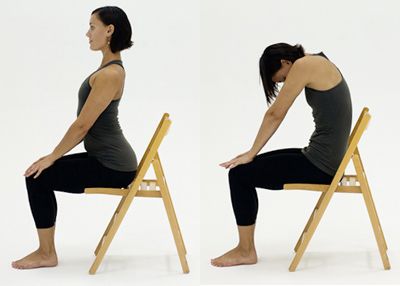
    1. Functional Fitness Flow: Seated Cat-Cow Stretch

    Seated Cat- Cow Stretch

    You don’t need to stand up for this one.

    –  Sit comfortably in your chair, place your feet flat on the ground, and rest your hands on your knees. 

    – As you inhale deeply through your nose, arch your back gently, pushing your chest forward. 

    – Exhale slowly through your mouth as you arch your back, just like a cat arching its back. Tuck your chin towards your chest and draw your navel towards your spine.

    – Continue this flowing motion, alternating between the Cow position on the inhale and the Cat position on the exhale. 

    – Aim to perform 5-10 cycles of the Seated Cat-Cow Stretch. As you do this, focus on the sensation of stretching and releasing the muscles along your spine.

    Shoulder opener stretches can be performed discreetly at your desk and is especially beneficial for combating the effects of sitting for extended periods, helping to alleviate tension and improve your posture. 

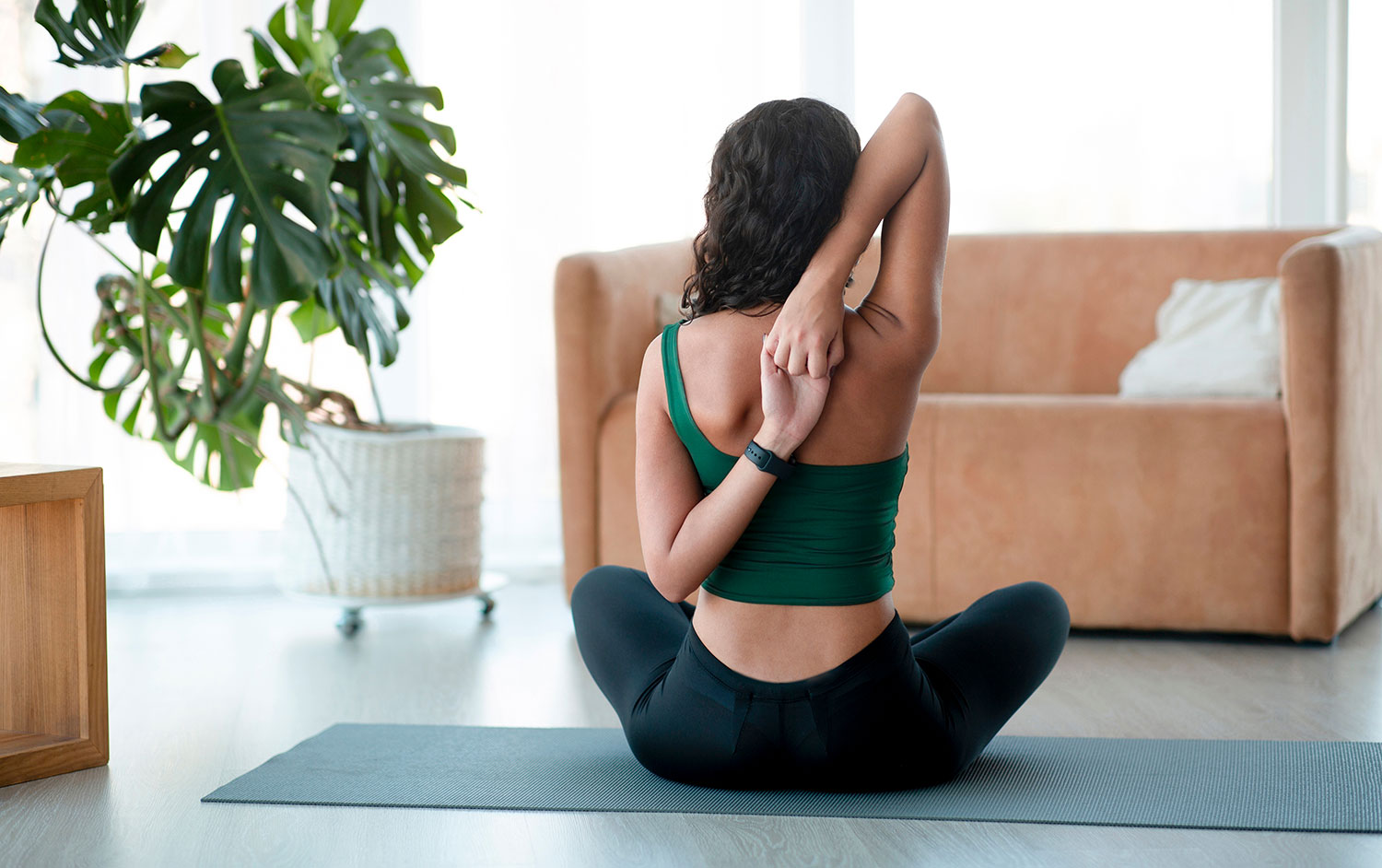
    2. Desk Shoulder Opener

    Shoulder Opener - Workplace Functional Fitness

    The Desk Shoulder Opener is an excellent exercise to relieve tension in your shoulders and chest.

    – Begin by either standing or sitting up straight in your chair.

    – Reach both arms behind your back and interlock your fingers. If you can’t interlock your fingers, you can use a towel or a strap to bridge the gap between your hands.

    – With your fingers interlocked, gently straighten your arms, and begin to lift them upward behind you. As you do this, try to open your chest and squeeze your shoulder blades together. You should feel a stretch in your chest and shoulders.

    – Maintain this stretched position for 15-20 seconds. Focus on your breath and try to relax into the stretch.

    – Release the stretch, and if needed, shake out your arms. You can repeat the Desk Shoulder Opener stretch a few times, gradually deepening the stretch with each repetition.

    The Desk Shoulder Opener is an excellent way to counteract the forward shoulder posture that often comes with desk work. 

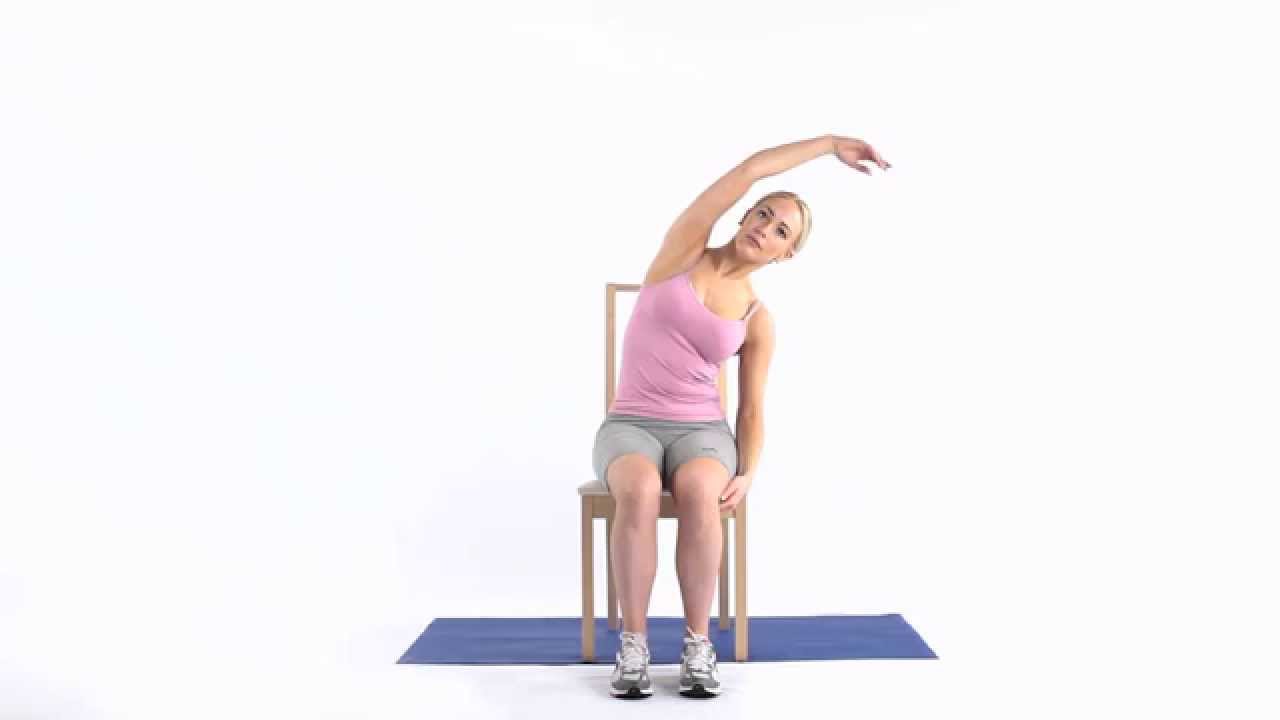
    3. Lateral Flexion Stretch for Functional Fitness:

    Lateral flexion - Workplace Functional Fitness

    This exercise is particularly helpful for individuals who spend long hours seated.

    – To perform this stretch, begin by sitting up straight in your chair with your feet flat on the floor.

    – Raise your right arm overhead, extending it fully. As you do so, gently lean to the left side, keeping your left hand planted on your chair’s seat or holding onto the armrest. 

    – Hold this stretched position for 15-20 seconds.

    – Make sure to breathe steadily throughout the stretch, and then switch to the other side, repeating the process to stretch your left side.

    Integrating it into your daily routine can contribute to better posture and reduced discomfort associated with prolonged sitting.

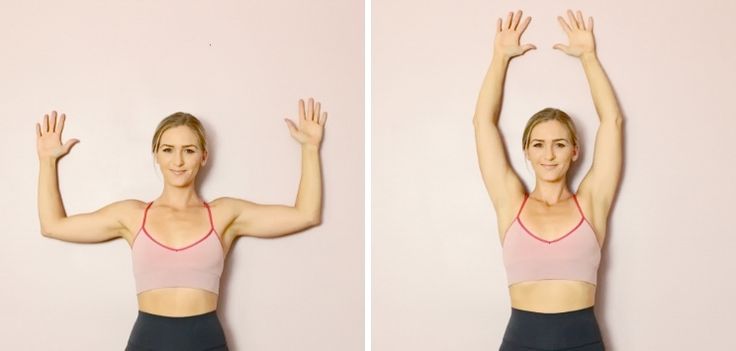
    4. Wall Angels for Upper Body Mobility

    Wall Angels is an excellent exercise for improving shoulder mobility and posture.

    Wall Angels for Upper Body Mobility

    –  Begin by standing with your back against a wall. Your feet should be about a foot away from the wall, and your heels, hips, shoulders, and head should all be touching the wall.

    – Raise both arms, bending your elbows at a 90-degree angle, so your upper arms are parallel to the ground and your lower arms are pointing upward. Your arms should form a “goalpost” shape.

    – Slowly slide your arms up the wall while maintaining contact between your arms and the wall. Continue moving your arms as high as you comfortably can without forcing them.

    – Carefully lower your arms back down to the “goalpost” position, keeping them in contact with the wall throughout the movement.

    – Perform 10-15 repetitions of this sliding motion, focusing on keeping your entire back and arms in contact with the wall.

    Wall Angels are an effective way to open up your chest, improve shoulder mobility, and counteract the forward shoulder posture often associated with desk work. 

    Conclusion and Your Action Plan

    Remember, folks, your health matters as much as your work. Incorporate these ergonomic exercises and stretches into your daily routine to improve your posture, reduce the risk of workplace-related injuries, and feel more energized throughout the day.

    So, here’s your action plan:

    1. Start your day with a few rounds of seated cat-cow stretches.

    2. Take short breaks to perform desk shoulder openers.

    3. Stand up, stretch those hip flexors, and take a walk around the office.

    4. End your with a set of wall angels.

    Small changes can make a big difference. Let’s keep our bodies happy and healthy while conquering the work world. Cheers to functional fitness for a more productive and pain-free day!

    Read also: https://www.treadmillonline.in/what-is-proprioception-5-proprioceptive-exercises-to-enhance-balance-stability/

  • Proprioception is the body’s ability to recognise and distinguish its position and motion of its limbs without looking at it. This ability is facilitated with the help of certain specialized receptors located in your muscles, tendons, joints, and inner ears. These receptors continuously send information to your brain. The information thus collected, allows your brain to create a map of your body’s location and movements in relation to its surroundings.

    How Proprioception affects your fitness

    Now, think of proprioception as your body’s internal GPS system. It helps you navigate through your surroundings, maintain balance while walking or standing, and adjust your movements based on the terrain. Without effective proprioception, simple tasks like walking up stairs or even standing upright can become challenging.

    When it comes to staying fit and healthy, people usually focus on things like strength, endurance, and flexibility. But there’s another important thing called proprioception that often gets overlooked. Proprioception helps you stay balanced, stable, and coordinated. 

    5 Proprioception Exercises to Enhance Balance and Stability:

    Improved proprioception not only reduces the risk of injuries during workouts but also elevates performance in sports, ensuring precise movements and better control over the body’s actions. In essence, integrating proprioceptive exercises into a fitness regime not only nurtures physical well-being but also empowers individuals to move confidently and efficiently, both in the gym and in everyday life.

    Incorporating proprioception exercises into your fitness routine can yield remarkable benefits. Here are five exercises that can help you improve your balance and proprioceptive abilities:

    Certainly, let’s delve deeper into each of the proprioception exercises you’ve mentioned and understand how they work to enhance balance and coordination:

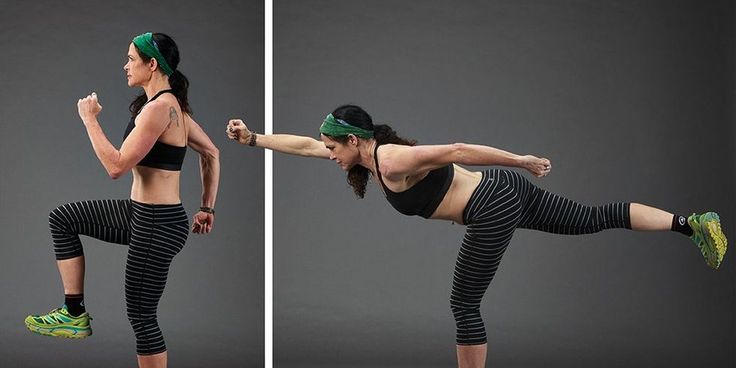
    1. Single-Leg Balance:

    This exercise might seem simple, but it’s highly effective for improving proprioception. With the single-leg balance, you are challenging your body to maintain stability and balance. The key is to keep a straight posture, engaging your core muscles., as this challenges your proprioceptors further. 

     Single-Leg Balance - Proprioception
    • First, start by standing on one leg,
    • Focusing on a stable point in front of you helps anchor your gaze and aids in balance maintenance. 
    • As you progress, aim to extend the duration you can hold the pose.
    • Alternatively, standing on an unstable surface like a foam pad adds an extra layer of difficulty, forcing your body to adapt and fine-tune its balancing response.
    • To take it up a notch, close your eyes – this removes visual input, increasing your reliance on proprioceptive feedback.  

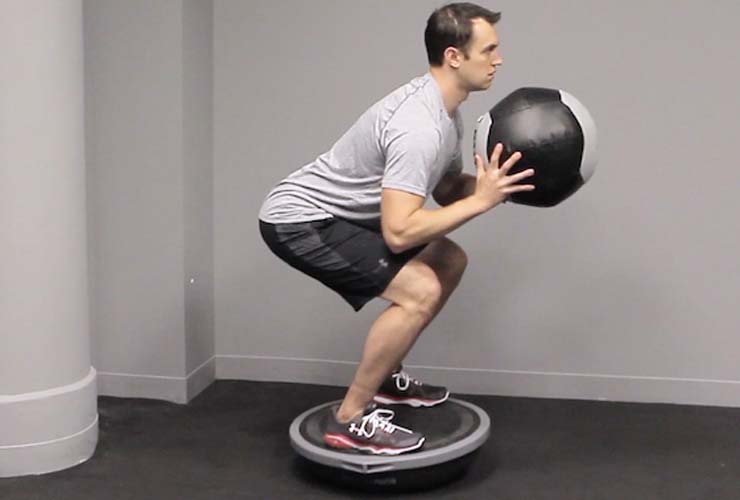
    2. Bosu Ball Squats:

    Secondly, the Bosu ball introduces an element of instability to squats. By standing on the flat side of the Bosu ball, your body needs to constantly adjust to maintain balance. This exercise not only strengthens your lower body but also sharpens your balance and coordination skills.

    Bosu Ball Squats
    1. Here, stand  on the flat side of the Bosu ball.
    2. Initiate the squat by bending your hips and knees simultaneously.
    3. As you descend into the squat, your body will need to adjust to the Bosu ball’s instability. Focus on engaging your core muscles to maintain balance.
    4. Maintain your center of gravity and properly distribute your weight between both feet.
    5. Return to the beginning position by pushing through your heels.
    6. Exhale as you lift, maintaining control over your movement.
    7. If you’re new to squats on a Bosu ball, start with a lower number of reps and gradually increase as your balance improves.

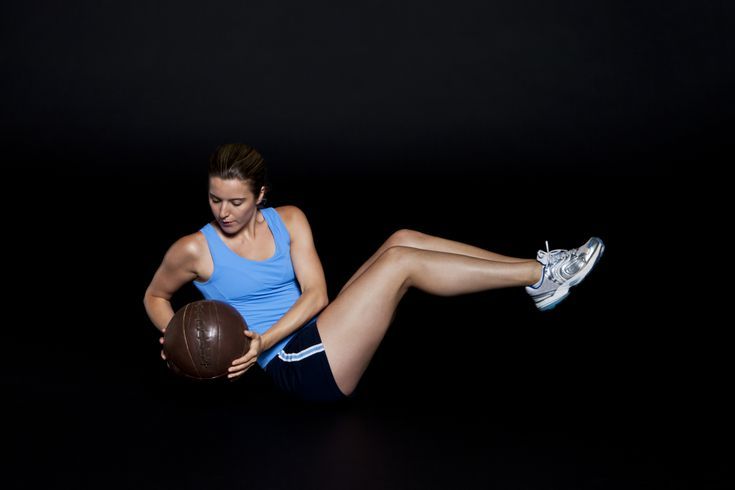
    3. Lateral Lunges with Medicine Ball:

    Thirdly, incorporating a medicine ball into lateral lunges adds complexity to the movement. By holding the ball at chest height, you challenge your proprioceptive system to adapt to the extra weight. The exercise also addresses functional fitness.

    Lateral Lunges with Medicine Ball - proprioception
    1. Hold the medicine ball close to your chest, keeping your elbows pointed outward. This is your starting position.
    2. Take a lateral (sideways) step to your right. As you step, simultaneously push your hips back and bend your right knee.
    3. Lower your body down into a lunge position on your right side. Your left leg remains extended.
    4. Keep your chest lifted, and ensure that your right knee does not extend beyond your right toes.
    5. The medicine ball should remain close to your chest throughout the movement.
    6. Push off your right foot to return to the starting position in an upright stance.
    7. Perform the same lateral lunge movement to your left side.
    8. Repeat the required number of repetitions on each side. Aim for balanced repetitions to work both sides equally.

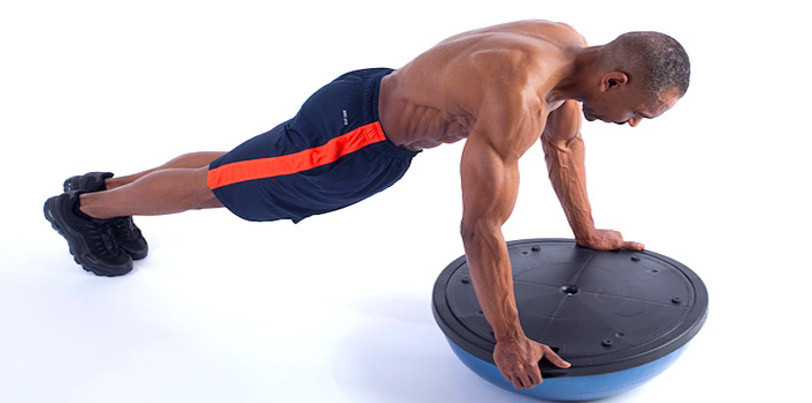
    4. Balance Board Activities:

    Next, using a balance board or wobble board introduces dynamic instability. When you perform exercises like squats, lunges, or push-ups on these boards, your body constantly adjusts to maintain stability. The shifting nature of the board forces your proprioceptors into action. Over time, this can lead to improved joint stability and muscle control.

    1. Stand on the balance board with your feet hip-width apart.
    2. Keep your knees slightly bent and your core engaged.
    3. Maintain good posture with your shoulders back and your gaze forward.
    4. Start by trying to find your balance on the board. The board will naturally tilt in different directions as you stand on it.
    5. Focus on keeping your weight centered and distributing it evenly between both feet.
    6. Use your core muscles to stabilize your body and prevent excessive tilting.
    7. Once you’re comfortable, lower your body into a squat by bending your hips and knees.
    8. As you squat down, the board will tilt, challenging your balance. Maintain stability by using your core.
    9. Rise back up to the starting position by pushing through your heels.
    10. Perform forward or lateral lunges on the balance board.
    11. Take a step forward or to the side while keeping your balance on the moving surface.
    12. Lower into the lunge by bending your knees, maintaining good form and stability.
    13. Experiment with variations to keep the challenge level appropriate for your fitness level.

    5. Crossover Steps for Improved Proprioception: 

    Finally, crossover steps are a fantastic way to challenge your coordination and proprioception simultaneously. This exercise requires your brain to process and relay information rapidly, enhancing your ability to adjust your movements based on proprioceptive feedback. As you become more proficient, you can increase the speed and complexity of the pattern, further challenging your coordination.

    Crossover steps for improved proprioception
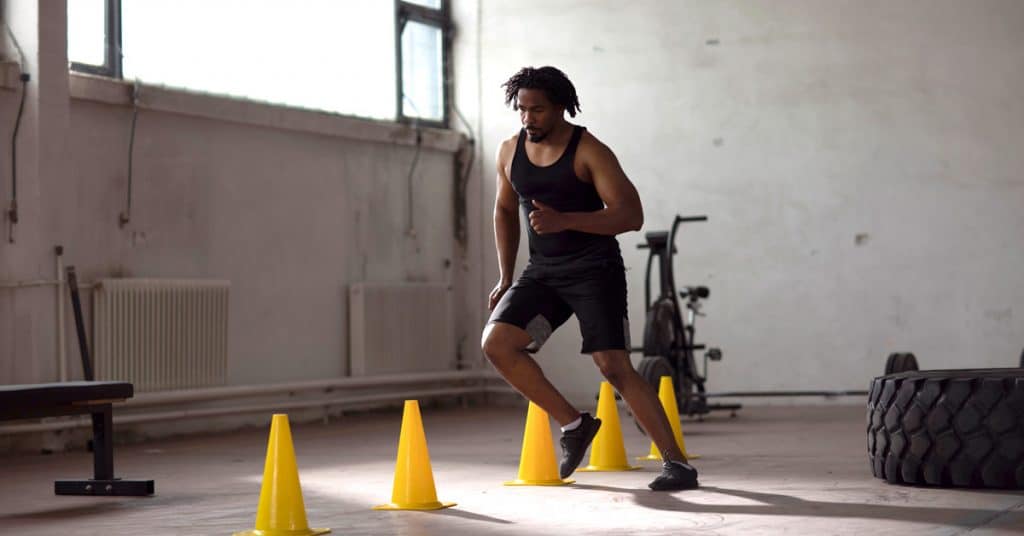
    1. Place small markers on the floor to create a zigzag pattern. These markers can be small cones, pieces of tape, or any easily visible objects.
    2. Stand at the starting point, next to the first marker, facing the direction you will be moving (diagonally).
    3. Begin by taking a step diagonally forward and to the side with your right foot. Cross it over your left foot.
    4. Land on the ball of your right foot and keep your weight balanced on it.
    5. Immediately follow the first step by bringing your left foot diagonally forward and to the side, crossing it over your right foot.
    6. Continue this pattern, taking quick and deliberate steps, alternating between your right and left feet.
    7. As you cross over, keep your core engaged to maintain balance and stability.
    8. Swing your arms naturally to help with your rhythm and balance.
    9. Focus on controlling your movement and maintaining a steady pace. This exercise is about precision, not speed.
    10. Continue the crossover steps until you’ve completed the zigzag pattern, moving from one end to the other.

    These exercises target different aspects of proprioception, collectively contributing to improved balance, stability, coordination, and functional fitness. As with any fitness routine, consistency is key – over time, you’ll likely notice enhanced control over your movements and a heightened sense of body awareness.

    In Conclusion: Prioritize Your Proprioception

    In the pursuit of fitness, it’s essential to consider all facets of well-being, and proprioception should not be overlooked. Evidently, incorporating proprioception exercises into your routine can significantly enhance your balance, stability, coordination, and overall functional fitness. By fine-tuning your body’s internal GPS system, you’ll not only perform better in sports and physical activities but also reduce the risk of injuries in your daily life. So, step up to the challenge and embark on the journey to better proprioception and improved fitness.

    Read also : Cardio Workouts: Fun and Effective Exercises to Boost Fitness

  • In today’s fast-paced society, sleep disorders, particularly insomnia, have become increasingly common due to constant stress, overstimulation, and a sedentary lifestyle. Medications may offer short-term relief, but a more comprehensive and sustainable solution to battle insomnia is yoga for better sleep and overall well-being.

    Yoga fosters a deep mind-body connection, promoting inner peace and tranquility. Regular practice not only improves sleep quality but also brings numerous benefits, including reduced stress, increased flexibility, and enhanced mental focus. In this article, we will explore effective yoga asanas that can alleviate insomnia and pave the way for a restful night’s sleep.

    6 Yoga Asanas for Sound Sleep:

    In the quest for a good night’s sleep and relief from insomnia, turning to the ancient practice of yoga can be a life-changing decision. Yoga, with its blend of physical postures, breathwork, and meditation, offers a path to inner peace and tranquility. Through the practice of specific asanas, or yoga poses, individuals can experience a profound release of tension, a calmness of the mind, and a deep connection with their bodies. 

    Yoga Asanas that provide relief from Insomnia

    In this section, we will explore some of the most effective asanas of yoga for better sleep that can become your allies in the journey to improved well-being. So roll out your yoga mat, breathe deeply, and allow these asanas to embrace you in their soothing embrace, leading you towards restful nights and brighter days.

    1. Child’s Pose (Balasana) – Chief Yoga Pose for Better Sleep

    Child’s Pose, also known as Balasana, is a gentle and relaxing yoga pose that is often used as a resting position during a yoga practice. It stretches the back, shoulders, and hips, while also promoting a sense of calm and relaxation. 

    Balasana- Yoga for Better Sleep

    To perform Child’s Pose (Balasana):

    • Start by being on your hands and knees, your wrists should be directly under your shoulders and your knees under your hips.
    • Take a deep breath in, and as you exhale, slowly sit back on your heels, keeping your arms extended in front of you.
    • Lower your chest towards the floor and rest your forehead on the mat.
    • Your big toes should touch, and your knees can be together or slightly apart, depending on your comfort level.
    • Relax your arms and let them rest alongside your body or keep them extended in front of you.
    • Breathe deeply and allow your body to sink into the pose, feeling a gentle stretch in your back, shoulders, and hips.
    •  Hold the pose for a few breaths or as long as you like, enjoying the sensation of relaxation.
    • To come out of the pose, walk your hands back towards your body and gently lift your torso back up into a kneeling position.

    Child’s Pose is a wonderful resting pose in yoga that helps to release tension in the back and shoulders while calming the mind. It’s a great pose to return to whenever you need a moment of rest and rejuvenation during your practice. Enjoy the soothing benefits of Child’s Pose and allow it to be a comforting pose in your yoga journey.

    2. Standing Forward Bend (Uttanasana)

    Uttanasana is a forward bending pose that promotes relaxation by gently stretching the hamstrings and lower back. As the head hangs below the heart, this pose allows for increased blood flow to the brain, reducing stress and encouraging tranquility, and hence is an ideal component of yoga for better sleep.

    Here’s how to perform Standing Forward Bend (Uttanasana):

    Uttanasana - Yoga for Better Sleep
    • Start by standing tall with your feet hip-width apart and your arms at your sides.
    • Inhale deeply, then extend your spine.
    • As you exhale, hinge at your hips and bend forward from your waist, keeping your back flat.
    • Allow your arms to hang down towards the floor or hold onto your elbows with opposite hands.
    • Keep your knees slightly bent to protect your hamstrings, especially if you have tight hamstrings.
    • Let your head droop heavily and relax your neck.
    • Engage your quadriceps to gently lift your kneecaps.
    • Breathe deeply and stay in the pose for a few breaths or as long as it feels comfortable.
    • To come out of the pose, inhale and slowly lift your torso back up to a standing position, keeping your back straight.

    Standing Forward Bend is a calming and grounding pose that stretches the hamstrings, calves, and lower back. It’s a wonderful way to release tension and relax both the body and mind. Remember to listen to your body and modify the pose as needed to suit your flexibility and comfort level. Enjoy the benefits of this pose as you surrender to the gentle flow of breath and find tranquility in the present moment.

    3. Legs-Up-the-Wall Pose (Viparita Karani)

    Viparita Karani is a restorative inversion that aids in relaxation and sleep. By elevating the legs against a wall, blood circulation improves, and the body can release built-up tension. This pose also helps reduce anxiety and fatigue, preparing the mind and body for a better night’s sleep.

    To perform Legs-Up-the-Wall Pose (Viparita Karani)

    Viparita Karani - Yoga for Better Sleep
    • Place one side of your body against a wall as you sit.
    • Lie down on your back and swing your legs up the wall, so your heels rest against it.
    • Keep your arms at your sides, relaxed, with your palms facing up.
    • Adjust your body so that your hips are slightly away from the wall, creating a small space between your lower back and the wall.
    • Close your eyes, relax your shoulders, and breathe deeply.
    • Hold the pose for 5-10 minutes or as long as you feel comfortable.
    • To come out of the pose, gently slide your legs down the wall and roll to one side.

    4. Reclining Bound Angle Pose (Supta Baddha Konasana)

    Supta Baddha Konasana is an excellent pose for opening the chest and hips. It promotes relaxation and reduces physical and emotional tension, making it an ideal choice for those struggling with insomnia. This pose can also improve breathing patterns and relieve symptoms of anxiety and depression.

    Here’s how to perform Reclining Bound Angle Pose (Supta Baddha Konasana):

    Sapta Baddha Konasana for better sleep
    • Start by sitting on the floor with your legs extended in front of you.
    • Allowing your knees to slide out to the sides, bending your knees, bring the soles of your feet together.
    • Gently lie back on the floor while supporting yourself with your elbows and forearms.
    • Slowly lower your back and head to the ground, releasing your arms to rest alongside your body.
    • Make sure your spine is straight and comfortable in the position.
    • Allow your hips to open naturally, feeling a gentle stretch in the inner thighs and groin area.
    • Relax your shoulders and let them melt into the floor.
    • You can rest your hands on your belly or keep them by your sides, palms facing up.
    • Close your eyes and take deep, slow breaths, surrendering to the pose and finding a sense of peace.
    • For as long as it seems comfortable, stay in the pose for a few breaths.
    • To come out of the pose, bring your knees together and use your hands to help you sit up slowly.

    Reclining Bound Angle Pose is a restorative pose that allows for deep relaxation and helps open the hips and groin. It’s a wonderful way to release tension and find inner tranquility. Be gentle with yourself and adjust the position as needed to ensure a comfortable stretch. Allow the breath to guide you through this pose, embracing its calming and rejuvenating benefits.

    5. Extended Puppy Pose (Uttana Shishosana)

    Uttana Shishosana is a variation of Child’s Pose that provides a gentle stretch to the spine, shoulders, and arms. It is a calming pose that relieves tension in the upper body and encourages a sense of tranquility, ideal for unwinding before bedtime.

    To perform Extended Puppy Pose (Uttana Shishosana):

    Uttana Shishosana for better sleep
    • Starting from a tabletop position on your hands and knees, place your wrists directly under your shoulders and your knees directly under your hips.
    • Walk your hands forward, a few inches in front of your shoulders.
    •   Lower your chest towards the floor, keeping your hips directly over your knees.
    • Your arms should be shoulder-width apart, and your elbows slightly lifted.
    • As you lower your chest, keep your hips high and your tailbone reaching towards the ceiling.
    • Gently lower your forehead to the mat, or if comfortable, let it rest on the floor or a yoga block.
    • Allow your chest to melt towards the floor, feeling a gentle stretch in your shoulders and spine.
    • Breathe deeply, expanding your rib cage with each inhale and relaxing on each exhale.
    • Hold the pose for a few breaths or as long as you like, maintaining a comfortable stretch.
    • To come out of the pose, walk your hands back towards your body and lift your torso back up into a tabletop position.

    Extended Puppy Pose is a variation of Child’s Pose that provides a deeper stretch for the shoulders and spine. It is a gentle backbend that promotes relaxation and releases tension in the upper body. Enjoy the benefits of this pose to open your heart and find a moment of peace and calmness in your practice.

    6 Corpse Pose (Savasana) – Concluding Yoga for Better Sleep

    Arguably the most vital part of any yoga practice, Savasana allows your body and mind to integrate the benefits of the previous poses. By lying still and consciously relaxing each part of the body, you can achieve a deep sense of peace and calm. Practicing Savasana regularly can have a profound effect on sleep quality and overall well-being.

    Here’s how to perform Corpse Pose (Savasana):

    Savasana for Better Sleep
    • Keep your arms at your sides, relaxed, with your palms facing up.
    • Keep your legs extended, slightly apart, and let your feet relax naturally to the sides.
    • Place your arms alongside your body, a few inches away from your torso, with your palms facing up.
    • Close your eyes and take a deep breath in, then exhale slowly, releasing any tension in your body.
    • Allow your entire body to relax, starting from your toes and moving all the way up to your head.
    • Soften your facial muscles, relax your jaw, and let your tongue rest gently on the roof of your mouth.
    • Bring your awareness to your breath, and let it flow naturally without any effort.
    • Stay in this pose for a few minutes, allowing yourself to completely let go and be present in the stillness.
    • To come out of the pose, gently wiggle your fingers and toes, slowly bring your awareness back to the room, and roll to one side.

    Corpse Pose is a final relaxation pose that allows your body and mind to absorb the benefits of the yoga practice. It’s a moment of stillness and surrender, offering a profound sense of peace and rejuvenation. Embrace the tranquility of Savasana and use it to connect with your inner self, leaving you feeling refreshed and ready to take on the rest of the day.

    Sleep Well, Live Well: Embrace Yoga for Better Sleep now!

    Insomnia can wreak havoc on our physical health, emotional well-being, and overall quality of life. Incorporating a regular yoga practice with the above-mentioned asanas can be a transformative step toward overcoming sleep disturbances. However, remember that consistency and patience are key. 

    Sleep Well, Live Well: Embrace Yoga for Better Sleep now

    The benefits of yoga extend beyond the mat, fostering a deeper connection with oneself and the world around us. In addition to practicing yoga, maintaining a balanced lifestyle, limiting screen time, and cultivating a peaceful sleep environment will further aid in resolving insomnia. Additionally, engaging in cardiovascular activities like running or walking on treadmills can further enhance sleep quality. These exercises trigger melatonin release, the sleep hormone, leading to more sound sleep. With dedication and mindfulness, the path to restful sleep can be within reach, allowing you to wake up each morning feeling refreshed and ready to embrace the day.

    Keyphrase: Yoga for better sleep
    Meta description: Explore 6 tranquil asanas to calm your mind and body. Embrace these asanas of yoga for better sleep such as Balasana, Uttanasana, Viparita Kar… Read more!

  • When it comes to shedding those extra pounds and achieving your weight loss goals, a treadmill can be your trusty ally. With its convenience and versatility, a treadmill allows you to engage in effective workouts even within a tight schedule. In this blog, we present the best 20-minute treadmill workout for weight loss that will boost your metabolism, burn calories, and help you on your journey to.

    1. HIIT (High-Intensity Interval Training) Workout:

    HIIT Workout for weight loss

    High-Intensity Interval Training is a proven method for burning fat and increasing cardiovascular fitness. The basic principle of HIIT is to push your body to work at maximum effort during the intense intervals, followed by a short recovery period to allow your heart rate to come down. 

    This cycle is repeated several times within a workout session, typically lasting anywhere from 10 to 30 minutes, making it ideal for people with busy schedules who may struggle to find time for longer workouts.

     Here’s a simple 20-minute HIIT treadmill workout:

    • Warm up with a brisk walk for 3 minutes.
    • Sprint at maximum effort for 30 seconds.
    • Recover with a slow walk or jog for 1 minute.
    • Repeat the sprint and recovery intervals for a total of 5 sets.
    • Cool down with an easy walk for 2 minutes.

    2. Incline Intervals:

    Incorporating incline into your treadmill workout engages more muscles and burns additional calories.  By adjusting the incline levels, you can simulate walking or running uphill, which significantly increases the effort required from your lower body muscles and cardiovascular system.

    This workout focuses on varying incline levels to challenge your body:

    • Begin with a 3-minute warm-up at a comfortable walking pace.
    • Set the incline to 5% and walk at a brisk pace for 2 minutes.
    • Increase the incline to 10% and walk for 1 minute.
    • Lower the incline back to 0% and jog or walk briskly for 2 minutes.
    • Repeat the incline intervals for one more round.
    • Cool down with a 2-minute easy walk.

    3. Pyramid Run:

    Pyramid run treadmill workout for weight loss

    The pyramid run is a treadmill workout that involves gradually increasing and then decreasing the intensity in a pyramid-like fashion. This type of workout keeps your body guessing by constantly changing the challenge level, which can lead to greater calorie burn and fitness gains. The pyramid run is an effective way to add variety to your treadmill workouts and prevent plateauing.

    • Warm up with a 4-minute jog at a moderate pace.
    • Increase the speed every minute for the next 5 minutes until you reach your maximum running speed.
    • Decrease the speed every minute for the next 5 minutes, gradually returning to your starting pace.
    • Finish the workout by running at your starting pace for one more minute.
    • Cool down with a 2-minute walk at an easy pace.

    4. Steady-State Endurance:

    Steady-state cardio helps burn calories consistently throughout your workout, making it ideal for weight loss.

    Whether you’re walking, jogging, cycling, or using a cardio machine like an elliptical or rowing machine, the key is to keep your heart rate elevated at a comfortable and consistent level throughout the workout.

    • Warm up with a 5-minute walk or light jog to get your heart rate up.
    • Run at a steady pace that challenges you for 18 minutes.
    • Aim to maintain the same speed throughout the workout.
    • Cool down with a 2-minute slow walk.

    5. Power Walking Circuit:

    Power-walking circuit workout for weight loss

    This workout combines brisk walking with bodyweight exercises to target multiple muscle groups and boost your metabolism. The power walking form of exercise is characterized by continuous, rhythmic movements that elevate your heart rate to a moderate level and keep it relatively stable throughout the workout. 

    • Warm up with a 3-minute brisk walk.
    • Stop the treadmill and perform 10 squats.
    • Resume walking and increase the speed for 3 minutes.
    • Stop the treadmill again and do 10 push-ups.
    • Continue alternating between brisk walking and bodyweight exercises for lunges, tricep dips, and planks.
    • Finish with a 2-minute cool-down walk.

    Embrace the Journey to a Fitter and Healthier You!

    Incorporating these best 20-minute treadmill workout into your fitness routine will rev up your weight loss journey. Remember to stay consistent, challenge yourself, and listen to your body. Combine this series of workout for weight loss with a balanced diet, adequate hydration, and sufficient rest to optimize your results. Always consult with a healthcare professional before starting any new exercise program, especially if you have any pre-existing health conditions. With dedication and determination, you can achieve your weight loss goals and embrace a healthier, more active lifestyle.

  • Running is a popular form of exercise that offers numerous health benefits, such as improved cardiovascular fitness, weight management, and stress reduction. Whether you prefer the controlled environment of a treadmill or the natural surroundings of outdoor running, both options have their own set of advantages and disadvantages. We’ll examine the advantages and disadvantages of each ie. running on treadmill vs outside in this blog post to provide you with the information you need to decide based on your interests and goals.

    Treadmill Running: Embracing the Indoors

    The treadmill, a stationary exercise machine equipped with a moving belt, provides a convenient and controlled environment for running. Here are some pros and cons of choosing the treadmill:

    A. Pros:

    1) Controlled pace and monitoring: 

    Treadmills allow you to set and maintain a specific pace with precision. This can be advantageous for interval training or when aiming to hit specific time or distance goals. Additionally, most modern treadmills come equipped with built-in heart rate monitors and other tracking features, providing real-time data on your workout intensity and progress.

    2) Accessibility and convenience: 

    Treadmills offer convenience and accessibility, especially for those with busy schedules or limited access to safe outdoor running routes. With a treadmill at home or at a gym, you can easily fit in a run regardless of the weather or time constraints.

    3) Multi-tasking: 

    multitasking while running on treadmill vs outside

    Running on a treadmill provides an opportunity to multitask. You can catch up on your favorite TV shows, listen to audiobooks or podcasts, or even work on your laptop while running. This can make your workout time more productive and enjoyable.

    4) Rehabilitation and recovery: 

    Another major advantage while we weigh on running on treadmill vs outside, is that treadmills are often used in physical therapy and rehabilitation settings. The controlled environment allows for gradual progression and targeted exercises for individuals recovering from injuries or surgeries. Treadmill running can aid in restoring mobility and strength while minimizing the risk of re-injury.

    5) Reduced impact on joints: 

    While comparing running on treadmill vs outside, treadmills often have shock absorption features, such as cushioned surfaces, that help reduce the impact on your joints compared to running on harder outdoor surfaces like concrete or asphalt. This might be especially helpful for people who have joint problems or are recuperating from injuries.

    B. Cons:

    1) Monotony of Running on Treadmill Vs Outside: 

    Running on a treadmill can sometimes feel monotonous due to the repetitive motion and the lack of changing scenery. This can make longer runs feel more mentally challenging and less engaging compared to outdoor running.

    2) Less variation in terrain: 

    Monotony of Running on Treadmill Vs Outside

    Running on treadmill vs outside generally provides a flat and consistent surface, which may not adequately simulate the diverse terrain found in outdoor environments. Running on different surfaces like grass, sand, or hills can engage different muscle groups and add variety to your training.

    3) Lack of fresh air and sunlight: 

    While treadmills offer climate control, they can’t replicate the fresh air and natural sunlight that you experience when running outdoors. Exercising in nature has been shown to boost mood and provide a sense of connection to the environment, which some people find uplifting and invigorating.

    Outdoor Running: Embracing Nature’s Path

    Outdoor running allows you to immerse yourself in nature’s beauty while enjoying the freedom of exploring different routes. Let’s explore the advantages and disadvantages of running outdoors:

    A. Pros:

    1) Natural variations in terrain: 

    Unlike treadmills, outdoor running exposes you to natural variations in terrain. Whether you’re running on trails, through parks, or along the beach, the uneven surfaces engage different muscles and challenge your balance and stability. This can lead to improved strength and proprioception.

    2) Mental rejuvenation: 

    Another important merit that we discover when comparing running on treadmill vs outside is that running in natural surroundings can have a profound effect on your mental well-being. The beauty of nature, the fresh air, and the absence of artificial stimuli can help reduce stress levels, boost mood, and increase feelings of happiness and relaxation 

    3) Sense of accomplishment: 

    Accomplishment in running on treadmill vs outside

    Outdoor running often offers a sense of exploration and adventure. Conquering new routes, discovering scenic trails, or reaching a milestone in a specific outdoor race can provide a tremendous sense of accomplishment and fulfillment.

    4) Enhanced cognitive benefits: 

    Studies have shown that outdoor exercise, including running, can have a positive impact on cognitive function. The combination of physical activity and exposure to natural environments improves attention, concentration, and overall mental performance.

    5) Connection with the community: 

    Community connection

    Outdoor running provides opportunities to connect with other runners and the local community. Participating in group runs, charity races, or local running events can create a sense of camaraderie, support, and motivation. It’s a chance to meet fellow enthusiasts and share your passion for running.

    Remember, every runner is unique, and what works for one person may not work for another. It’s essential to consider your personal preferences, fitness level, goals, and any limitations you may have before deciding between treadmills and outdoor running. You can always experiment with both and find a balance that suits your needs. Ultimately, the most important thing is to enjoy your running experience and stay safe while pursuing your fitness goals.

    B. Cons:

    1) Weather limitations of Running on Treadmill Vs Outside: 

    Outdoor running is subject to the whims of weather conditions. Extreme heat, cold, rain, or snow can make running uncomfortable or unsafe. In such cases, you might need to modify your route, and timing, or wear appropriate gear, which can sometimes be inconvenient.

    2) Potential hazards: 

    Potential hazards

    Running outdoors comes with potential risks such as uneven terrain, traffic, and encounters with wildlife. It’s essential to choose safe routes, wear reflective clothing when running at night, and remain vigilant to ensure your personal safety.

    3) Impact on joints: 

    Compared to treadmills, outdoor running can place more stress on your joints due to harder surfaces like concrete or asphalt. It is important to choose proper footwear and gradually increase your mileage to minimize the risk of overuse injuries.

    Striking a Balance: Finding Your Perfect Running Mix

    In conclusion, the debate between running on treadmill vs outside ultimately comes down to personal preference and individual circumstances. Both options have their own set of advantages and disadvantages. Treadmill running provides convenience, climate control, and customizable features, while outdoor running offers the joys of nature, varying terrains, and a sense of exploration.

    finding the perfect mix in running on treadmill vs outside

    Instead of choosing one over the other, many runners find that incorporating both treadmill and outdoor running into their routine provides a well-rounded and enjoyable running experience. Remember, the most important thing is to find a form of running that you enjoy and can sustain in the long run, ensuring a healthier and happier you.

  • Creating a home gym setup allows you to bring the convenience and flexibility of a fitness facility right into the comfort of your own home. Whether you’re an avid fitness enthusiast or simply looking to incorporate more physical activity into your routine, a well-designed home gym can provide the perfect environment for achieving your fitness goals.

    home gym

    Designing the perfect home gym requires thoughtful planning, considering factors such as available space, budget, and the types of workouts you enjoy. From strength training to cardiovascular exercises and functional training, a comprehensive setup will cater to all aspects of your fitness routine.

    A carefully selected range of equipment forms the foundation of your home gym. Strength training essentials like power racks, barbells, and dumbbells offer versatility and the opportunity to challenge your muscles. Cardiovascular equipment such as treadmills, exercise bikes, rowing machines, and ellipticals provide options for heart-pumping workouts. Functional training equipment, like resistance bands, medicine balls, kettlebells, and suspension trainers, add variety and help improve functional strength and mobility.

    Essential Tips for Designing Your Perfect Home Gym Setup

    Let’s dive into some valuable tips to help you design the perfect home gym setup. Following these suggestions, you can create a fitness sanctuary that meets your specific needs, maximizes your space, and aligns with your fitness goals. Whether you’re a seasoned athlete or a beginner taking the first steps toward a healthier lifestyle, these tips will guide you in crafting an ideal workout space. Let’s get started!

    1. Space Planning:

    space planning for home gym

     It is essential to first evaluate the available space and allocate a dedicated area for your home gym. Ensure there is enough room for equipment, exercise movements, and proper ventilation. Avoid cramming all your gear into a compact space.

    2. Flooring:

    Choose a suitable flooring option to provide cushioning, stability, and protection.

    rubber mat for home gym

    Rubber mats, interlocking foam tiles, or specialized gym flooring are good options. This will keep injuries or harm to a minimum.

    3. Strength Training Equipment:

    While shortlisting the training equipment that your home gym will encompass, it is important to keep in mind your fitness goals. Here’s a list of strength equipment that you can introduce to your home gym.

        – Power rack or squat rack: 

           Allows for various compound exercises like squats, bench presses, and pull-ups.

       – Barbell and weights: 

          A versatile tool for various strength training exercises.

    dumbbells

       – Dumbbells or adjustable dumbbells: 

          Provide flexibility and a wide range of exercise options.

       – Adjustable bench: 

           Enables incline, decline, and flat bench exercises.

    4. Cardiovascular Equipment:

    treadmill

       – Treadmill: 

          Ideal for running, walking, and cardio workouts.

       – Exercise bike: 

          Offers low-impact cardio and interval training options.

       – Rowing machine: 

          Engages multiple muscle groups for a full-body workout.

       – Elliptical trainer: 

          Provides low-impact cardio and full-body workout.

    5. Functional Training Equipment:

       – Resistance bands:

    resistance bands

         Versatile and portable for resistance training and stretching exercises.

       – Medicine ball: 

        Suitable for core training, rotational exercises, and explosive movements.

      – Kettlebells: 

       Allows for dynamic movements and functional strength training.

       – Suspension trainer (e.g., TRX): 

        Uses body weight for a wide range of exercises.

    6. Additional Equipment:

       – Yoga mat: 

         For yoga, stretching, or floor exercises.

       – Foam roller:

    foam roller for home gym

         Helps with self-massage and muscle recovery.

       – Mirror: 

        Useful for checking form and technique during exercises.

       – Sound system: 

          Enjoy motivational music or workout videos.

    7. Must-Have Safety Gear for your Home Gym :

    To ensure the best possible outcome for your home gym routine, safety gear cannot be overlooked. Here are the essential accessories you must inculcate in your fitness equipment.

       – Weightlifting belt: 

         Provides back support during heavy lifts.

       – Weightlifting gloves: 

         Offers grip support and protection.

       – Gym flooring or crash mats:

          Cushions the floor and reduces impact during heavy lifting.

       – First aid kit:

    first aid kit for home gym

     Essential for any minor injuries or accidents.

    Tips to Enhance Your Perfect Home Gym Setup

    1. Assess Your Fitness Goals: 

    Determine your specific objectives, whether it’s building strength, improving cardiovascular fitness, or enhancing flexibility. This will guide your equipment choices and layout.

    2. Prioritize Essential Equipment: 

    Invest in high-quality, versatile equipment that aligns with your goals. Start with foundational items like a power rack, barbell, weights, or treadmill, and gradually expand your collection.

    3. Consider Multi-Functional Equipment: 

    Maximize space and versatility by choosing equipment that can serve multiple purposes. For example, adjustable dumbbells or a bench with different incline settings.

    4. Personalize the Atmosphere: 

    Enhance motivation by adding elements that inspire you, such as motivational quotes, uplifting artwork, or a sound system to play energizing music or workout playlists.

    5. Seek Professional Guidance Before Setting Up your Home Gym: 

    If you’re unsure about designing your home gym, consult a fitness professional or a personal trainer who can offer insights tailored to your goals and help optimize your setup.

    Creating Your Fitness Sanctuary: Embrace the Possibilities of Your Perfect Home Gym

    home gym

    Remember, your home gym can be a reflection of your personality and fitness aspirations. Continuously evaluate and adapt your setup as your needs evolve. By creating a space that encourages consistency and enjoyment, you’ll be well on your way to achieving your fitness objectives and living a healthier, more active lifestyle. Embrace the possibilities, and let your perfect home gym become a sanctuary for your well-being.

  • How treadmill workouts can make you look aesthetically fit?

    Let’s face it: Jogging on a treadmill is one of the most tedious cardio exercises there is.

    But many of us frequently engage in such tedium activity, especially in the winter, and wish that time would somehow move more quickly.

    The treadmill is among the most widely used pieces of gym equipment, despite its reputation as a soul-gasping human hamster wheel.

    It is a useful training tool for both marathon runners and newbie joggers and it also helps you look aesthetically fit if done right.

    One of the best indoor cardiovascular exercises for improving metabolism long after the activity is complete and burning more calories.

    It is also a very versatile machine with a wide range of series.

    The treadmill may be used for more than simply interval sprints and endurance runs that get your muscles moving while also energizing you to get going.

    There’s an old phrase that says “you have to move differently if you want different things.”

    With that in mind, the activities listed below will further improve your physique and make you look more attractive.

    Note: Please exercise with the utmost caution while doing these complex movements!

    1. Weighted Walking Lunges On The treadmill
    Weighted Walking Lunges On The treadmill

    Grab a set of weights that weighs around 5 or 10 pounds and start walking slowly after setting the treadmill to a comfortable speed—we advise starting no faster than half your usual walking pace.

    Take a big step forward with your right foot while holding the dumbbells in each hand, then lower into a lunge while keeping the knee in line with the second toe.

    Returning to your starting posture, take a quick step forward with your left foot while lowering into the subsequent lunge. Lunges can be performed 10 to 15 times reputation to a series of 3 – 4 working sets.

    Concerned with the weights?

    Try modifying the walking lunge by placing your hands on your hips.

    1. Butt Kicks
    Butt Kicks

    Reposition yourself so that you are facing forward on the treadmill belt, and increase the speed just a little bit above your typical power-walking speed.

    As soon as you’re at ease, kick the right foot back as close to your buttocks as far as you can while concentrating on using your glute and hamstring muscles.

    Alternatively, continue with your left foot.

    Continue with alternating buttocks kick for 30 seconds while remaining light on your toes, maintaining a tall posture, and keeping your core tight.

    1. Side Shuffle
    Side Shuffle

    Face the right side of the treadmill with both feet on the belt and continue your modest walking speed.

    Slowly pick up the pace until it is just a bit faster than you normally walk.

    Use your left foot to take a step to the left.

    Quickly hop to the right foot, then quickly step to the left with the left foot.

    Once it is comfortable to maintain a constant side shuffle, slowly adjust the speed.

    Don’t worry if you feel a little behind because these will be slower than the side shuffles you would conduct across the gym floor.

    After 30 seconds, switch directions, slow down the belt to your normal walking pace, and then repeat.

    If you feel unstable, slow the speed to a walk and perform controlled side steps instead.

    1. High-Knee Skip

    Go from walking to skipping with the belt while maintaining your normal power-walking pace. Once you’ve settled into a comfortable tempo, speed things up: As you push off with the left foot and maintain a tall posture and tight core, drive your right knee towards your chest while jumping as high (and as controlled) as you can. Continually lower yourself and push off with your right foot while driving your left knee toward your chest. Alternate continuously for 30 seconds. Start by merely skipping if you’re not quite ready to get on a treadmill.

    1. Jump Squat

    Limit the speed of the treadmill belt to no more than half of your typical walking pace. At the front of the treadmill, bring both feet together. Immediately drop yourself into a squat position, keeping the knees securely behind the toes. Allow the treadmill’s belt to transport you to the back of the machine, then drive through your legs to leap forward before coming back to the front in the squatting posture. Continue until you have made 10 to 15 jumps. Reduce the treadmill’s pace if you feel the slightest bit unsteady.

    SIMPLICITY IS ALWAYS SUSTAINABLE

    Additionally, experimenting with different routines, adhering to a diet, getting some fresh air, remaining hydrated, consuming a lot of fruits and vegetables, and lavishing yourself with attention will help you develop an attractive figure.

    Despite how hard you work, your body needs rest to recuperate and create new muscles.

    At that time, the major body is constructed.

  • Chances are you’ve heard about horsepower. Just about every car ad on TV mentions it, people talking about their cars bandy the word about and even most lawn mowers have a big sticker on them to tell you the horsepower rating.


    But what is horsepower, and what does the horsepower rating mean in terms of performance? In this article, you’ll learn exactly what horsepower is and how you can apply it to your everyday life.


    The term horsepower was invented by the engineer James Watt. Watt lived from 1736 to 1819 and is most famous for his work on improving the performance of steam engines. We are also reminded of him every day when we talk about 60-watt light bulbs.


    The story goes that Watt was working with ponies lifting coal at a coal mine, and he wanted a way to talk about the power available from one of these animals. He found that, on average, a mine pony could do 22,000 foot-pounds of work in a minute. He then increased that number by 50 percent and pegged the measurement of horsepower at 33,000 foot-pounds of work in one minute. It is that arbitrary unit of measure that has made its way down through the centuries and now appears on your car, your lawn mower, your chain saw and even in some cases your vacuum cleaner.
    What horsepower means is this: In Watt’s judgement, one horse can do 33,000 footpounds of work every minute. So, imagine a horse raising coal out of a coal mine as shown above. A horse exerting 1 horsepower can raise 330 pounds of coal 100 feet in a minute or 33 pounds of coal 1,000 feet in one minute, or 1,000 pounds 33 feet in one minute. You can make up whatever combination of feet and pounds you like. As long as the product is 33,000 foot-pounds in one minute, you have a horsepower. You can probably imagine that you would not want to load 33,000 pounds of coal in the bucket and ask the horse to move it 1 foot in a minute because the horse couldn’t budge that big a load. You can probably also imagine that you would not want to put 1 pound of coal in the bucket and ask the horse to run 33,000 feet in one minute, since that translates into 375 miles per hour and horses can’t run that fast. However, if you have read How a Block and Tackle Works, you know that with a block and tackle you can easily trade perceived weight for distance using an arrangement of pulleys. So you could create a block and tackle system that puts a comfortable amount of weight on the horse at a comfortable speed no matter how much weight is actually in the bucket.


    Horsepower can be converted into other units as well. For example:

    1 horsepower is equivalent to 746 watts. So if you took a 1-horsepower horse and put it on a treadmill, it could operate a generator producing a continuous 746 watts.
    1 horsepower (over the course of an hour) is equivalent to 2,545 BTU (British thermal units). If you took that 746 watts and ran it through an electric heater for an hour, it would produce 2,545 BTU (where a BTU is the amount of energy needed to raise the temperature of 1 pound of water 1 degree F).
    One BTU is equal to 1,055 joules, or 252 gram-calories or 0.252 food Calories. Presumably, a horse producing 1 horsepower would burn 641 Calories in one hour if it were 100-percent efficient.


    In this article, you’ll learn all about horsepower and what it means in reference to machines.